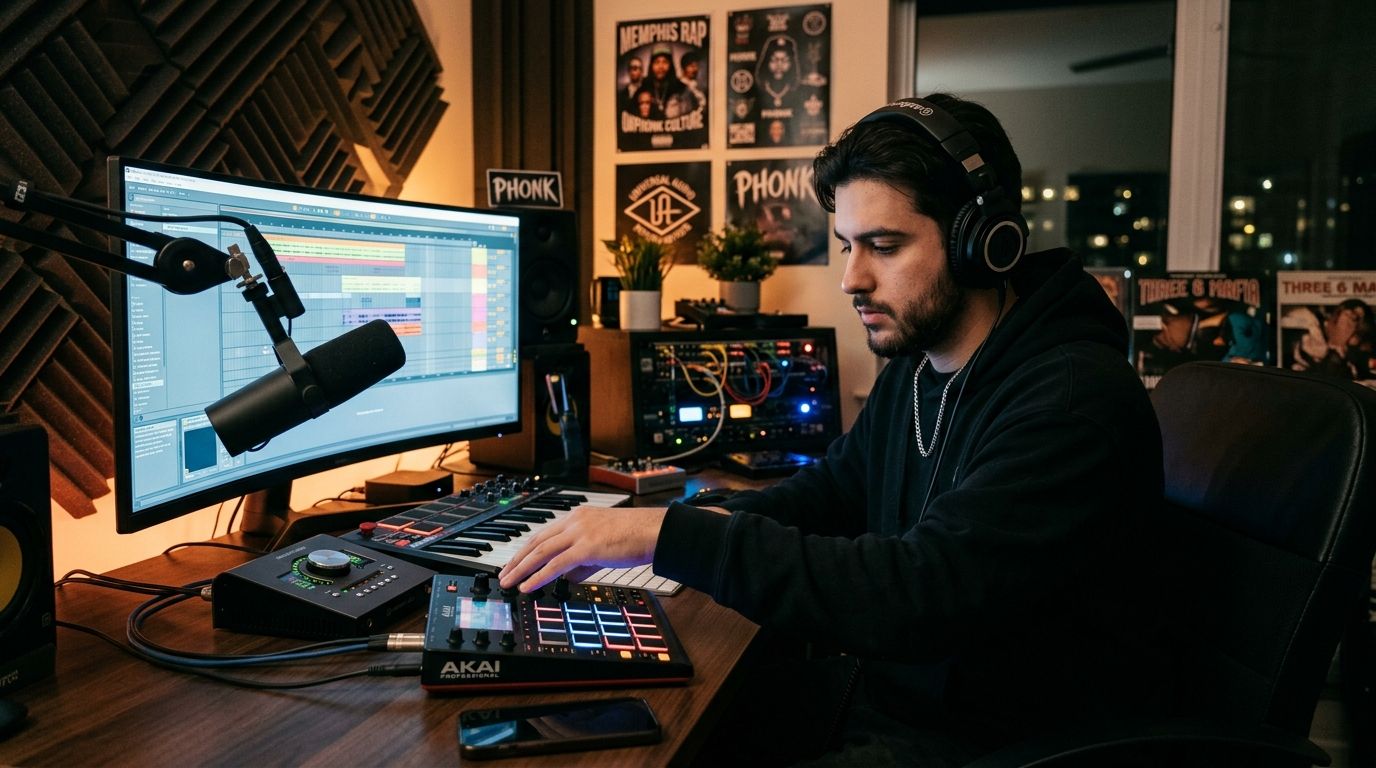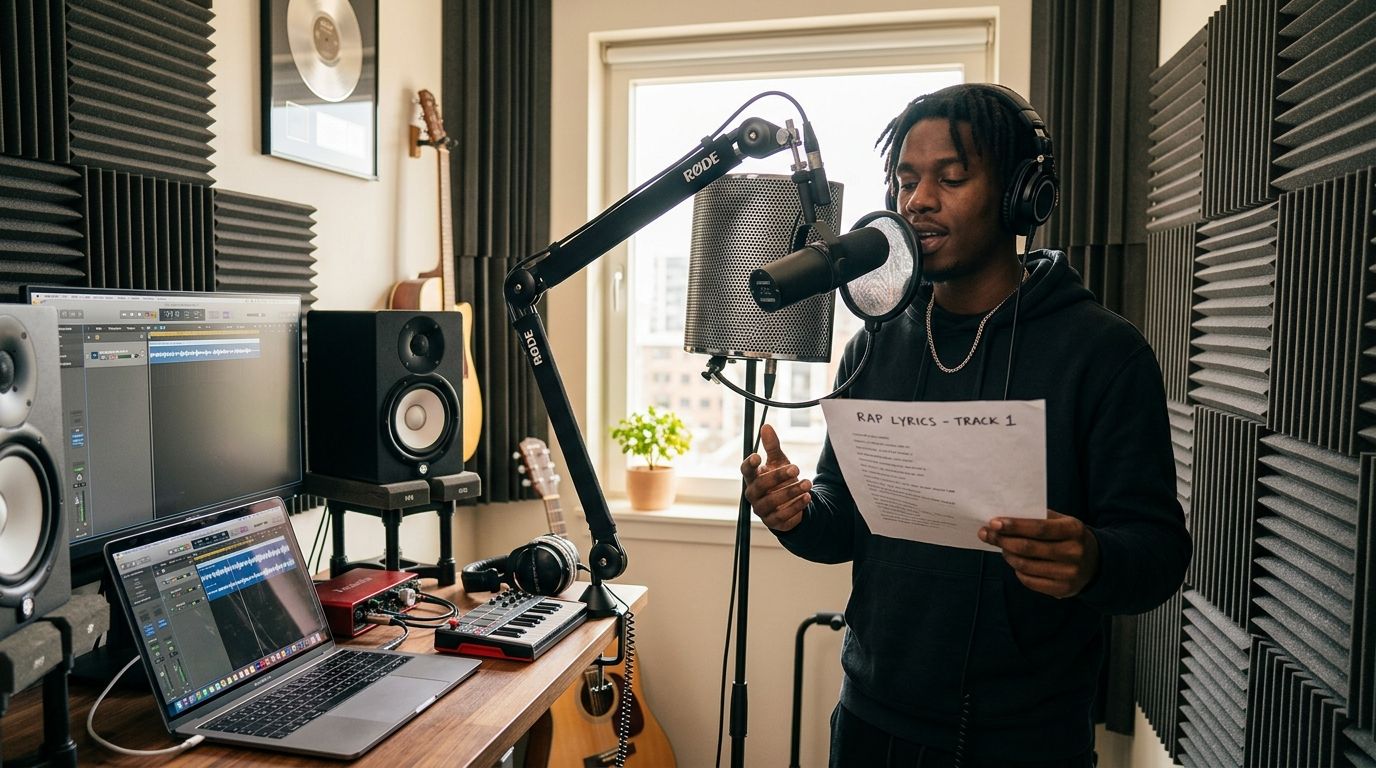
Building a home studio for recording rap vocals in 2026 comes down to four things: a room that doesn't echo, an audio interface, a cardioid condenser mic, and a DAW that can edit and comp takes. Skip the room treatment and none of the gear matters — a $50 mic in a treated closet beats a $500 mic in a bare bedroom every time.
- How to build a home studio for rap in 2026 starts with room treatment, not gear purchases.
- A cardioid condenser mic plus a basic 2-input audio interface covers most home rap vocal recording needs.
- Small closets with soft surfaces often out-record bare bedrooms because they kill reflections naturally.
- Recording and mixing are separate skills — budget time for both, not just the vocal take.
- A DAW running at 24-bit/48kHz is the current standard for clean rap vocal capture.
Why this matters
Most independent rappers blow their budget on a mic before they've fixed the room, then wonder why the vocal sounds thin and washed out next to a professionally mixed reference track. In 2026, the gap between a home recording and a studio recording isn't the price of the interface — it's whether the room reflects sound back into the mic. A home rap studio setup guide that starts with acoustics first, gear second, gets you 80% of the way to a clean take before you even touch a plugin.
Get the signal chain wrong at the recording stage and no amount of mixing fixes it later. That's the whole reason engineers say "fix it at the source" — EQ and de-essing can't undo room reflections baked into the file.
How to build a home studio for recording rap vocals
Follow these steps in order. Skipping ahead to gear before treating the room is the single most common mistake independent artists make in 2026.
- Pick the smallest, softest room you have access to. A closet full of clothes, a bedroom corner with a mattress against the wall, or a small office beats a large empty living room every time — hard parallel walls in a big room create flutter echo that a mic captures and a listener hears as boxiness.
- Treat first reflection points. Moving blankets, thick curtains, or 2-inch acoustic foam panels placed at ear-height on the wall directly behind and beside the mic cut most of the reflected sound before it hits the capsule.
- Add an audio interface. A basic 2-input interface running at 24-bit/48kHz is the current standard for rap vocal recording — it converts the mic signal into something your DAW can actually use without adding noise.
- Choose a cardioid condenser mic and a pop filter. Cardioid pattern rejects sound from the sides and rear, which matters in an untreated room. Set the pop filter about 6 inches from the capsule to kill plosives on words with hard "P" and "B" sounds.
- Set your gain before you record a single take. Peaks should sit comfortably below clipping — a hot signal that clips can't be fixed in the mix, a quiet signal just adds noise when you turn it up later.
- Track through closed-back headphones, not speakers, so the mic doesn't pick up bleed from the beat playing in the room.
- Comp your best lines across multiple takes in the DAW rather than trying to nail the whole verse in one pass — this is standard practice even in commercial studios.
- Send the session to mixing and mastering for home studio rappers once the raw vocal is clean, or handle it yourself if you've got the ear for it.
Starter setup: closet booth at 24-bit/48kHz
A closet lined with clothes and a moving blanket, a 2-input interface, a mid-range cardioid condenser mic, and free or low-cost DAW software. This setup gets a dry, usable vocal take with almost no reflections — the tradeoff is limited headroom for loud ad-libs, since a small space can get boomy fast. Verdict: Buy if you're recording your first project and need a functional vocal chain now.
Mid-tier setup: treated bedroom corner
Foam panels on the first reflection points, a proper mic stand and shock mount, a multi-input interface, and a full DAW license. This is where most working independent artists land by 2026 — enough treatment to sound clean without needing a dedicated room. Verdict: Buy once you're recording regularly and want consistent takes across sessions.
Pro-tier setup: isolation booth or dedicated room
A purpose-built booth or converted room with wall-to-wall treatment, a multi-pattern condenser mic, and outboard preamps. Overkill for someone dropping one loosie a month, but it removes every variable for artists tracking full projects at home. Verdict: Hold unless you're recording several artists a week or building out a real business around it — otherwise the mid-tier setup gets you 90% of the result.
“If the room echoes when you clap in it, the mic will hear it too.”
Why the right setup varies
No two home studios need the identical build. The right combination depends on:
- Room size and shape — small rooms with soft furnishings need less treatment than large rooms with bare walls.
- Genre and delivery style — aggressive trap ad-libs and loud freestyle deliveries need more headroom than a laid-back melodic verse.
- How many people record there — a room used by one artist can stay minimal; a room booked out to others needs more consistent, repeatable treatment.
- Whether the room doubles as a mix room — a space used for both recording and mixing needs more careful acoustic treatment than a vocal-only booth.
- Ceiling height — low ceilings bounce sound faster and need treatment overhead, not just on the walls.
- Ambient noise — street noise, HVAC, and neighbors dictate how much isolation (not just treatment) the space needs.
Skip the trial and error
Book a professional recording session and get a clean vocal without building the room yourself.
Do you need a vocal booth to record rap at home?
No — a vocal booth is not required to record rap vocals at home in 2026; a treated closet or bedroom corner does the same job for most artists. A dedicated booth only pays off once you're recording multiple artists or tracking full projects on a regular schedule.
What's the cheapest way to treat a room for rap vocals?
The cheapest treatment is a closet full of clothes and a couple of moving blankets hung on the first reflection points — this costs almost nothing and kills the majority of room echo. Foam panels are a step up in consistency but aren't required to get a usable take.
Can you record rap vocals on a USB mic?
Yes, a USB condenser mic can record usable rap vocals, especially in a well-treated small room. The tradeoff is less flexibility than an XLR mic through an audio interface — you can't upgrade the preamp or run multiple mics later without buying new gear.
FAQ
How much does it cost to build a home studio for rap in 2026?
Costs vary widely based on what gear you already own and how much room treatment you need. Room treatment (blankets, foam) is the cheapest line item; mics and interfaces are where budgets diverge most.
What's the best mic for recording rap vocals at home?
A cardioid condenser mic is the standard choice for home rap vocal recording because it rejects side and rear noise in untreated rooms. Best for artists working in bedrooms or closets without professional isolation.
Is a bedroom good enough to record rap vocals?
A bedroom works fine for recording rap vocals if the first reflection points are treated with blankets, foam, or furniture. Bare bedrooms with hard walls and few soft surfaces need the most work before they sound clean.
Do I need a DAW to build a home rap studio?
Yes, a DAW is required to record, edit, and comp vocal takes at home. Free DAWs handle basic recording; paid versions add editing and mixing tools most artists eventually need.
How close should you stand to the mic when recording rap vocals?
Most rap vocals are recorded 6 to 12 inches from the mic, adjusted based on how loud the delivery is. Louder ad-libs and aggressive deliveries need more distance to avoid clipping the input.
Can you mix rap vocals yourself after recording at home?
Yes, but mixing is a separate skill from recording and takes practice to get a vocal sitting correctly against a beat. Many independent artists record at home and send the session out for mixing and mastering instead.
What sample rate should I record rap vocals at?
24-bit/48kHz is the current standard for recording rap vocals in 2026, giving enough headroom for editing without excessive file size. Higher rates exist but rarely make an audible difference for vocal-only tracking.
One last thing
Most artists spend their first budget on the mic and their last budget on the room — flip that order and the difference shows up on every single track you record in 2026. A cheap mic in a treated closet consistently beats an expensive mic in an untreated bedroom, and that's not a matter of taste, it's just how reflections work. If you'd rather skip the build entirely, audio recording sessions for freestyle rap artists get you a clean vocal without buying a single piece of gear.