Booking a custom beat production session with Louie The Producer follows one fixed path: pick your license type, send your reference and vision, lock the session, and receive your deliverables once the beat is approved. The part most artists miss until it's too late is the license terms — a leased beat and a fully exclusive, work-for-hire buyout come with different ownership rights, and that decision has to happen before Louie touches the DAW, not after.
- Booking a custom beat session means picking your license type first, then sending references before any production starts.
- Exclusive buyouts transfer full copyright — leases don't, and that changes what you can do with the finished track.
- Custom beat production, mixing/mastering, and audio recording are three separate bookable services at Louiehasit.
- You own your masters only when the agreement says full copyright transfer, not just 'exclusive.'
Why this matters
A lot of independent rappers book a session the same way they'd buy a type beat off a marketplace — pick a sound, send money, wait for a file. Custom production doesn't work like that. You're paying for original work built around your reference, and the paperwork around ownership matters as much as the sound design.
Get the license type wrong and you can end up with a beat you can't distribute the way you planned, or one you're paying royalties on when you thought you'd bought it outright. Louie The Producer builds that decision into step one of the booking process on Louiehasit instead of burying it in fine print after the fact.
How to book a custom beat session with Louie The Producer
The process runs the same whether you're cutting a single or building out a full mixtape:
- Decide on license type first. A lease keeps ownership with Louie and limits how you can use the track. An exclusive buyout with full copyright transfer means the beat is yours and off the market for good.
- Send your reference material. Artist references, mood ('dark,' '808-heavy,' whatever fits), tempo range, and any existing vocal or hook idea. The more specific the reference, the fewer revision rounds you'll need.
- Confirm the scope. Is this a standalone custom beat, or do you also need mixing/mastering and a recording session bundled in? Say it up front so the quote covers everything.
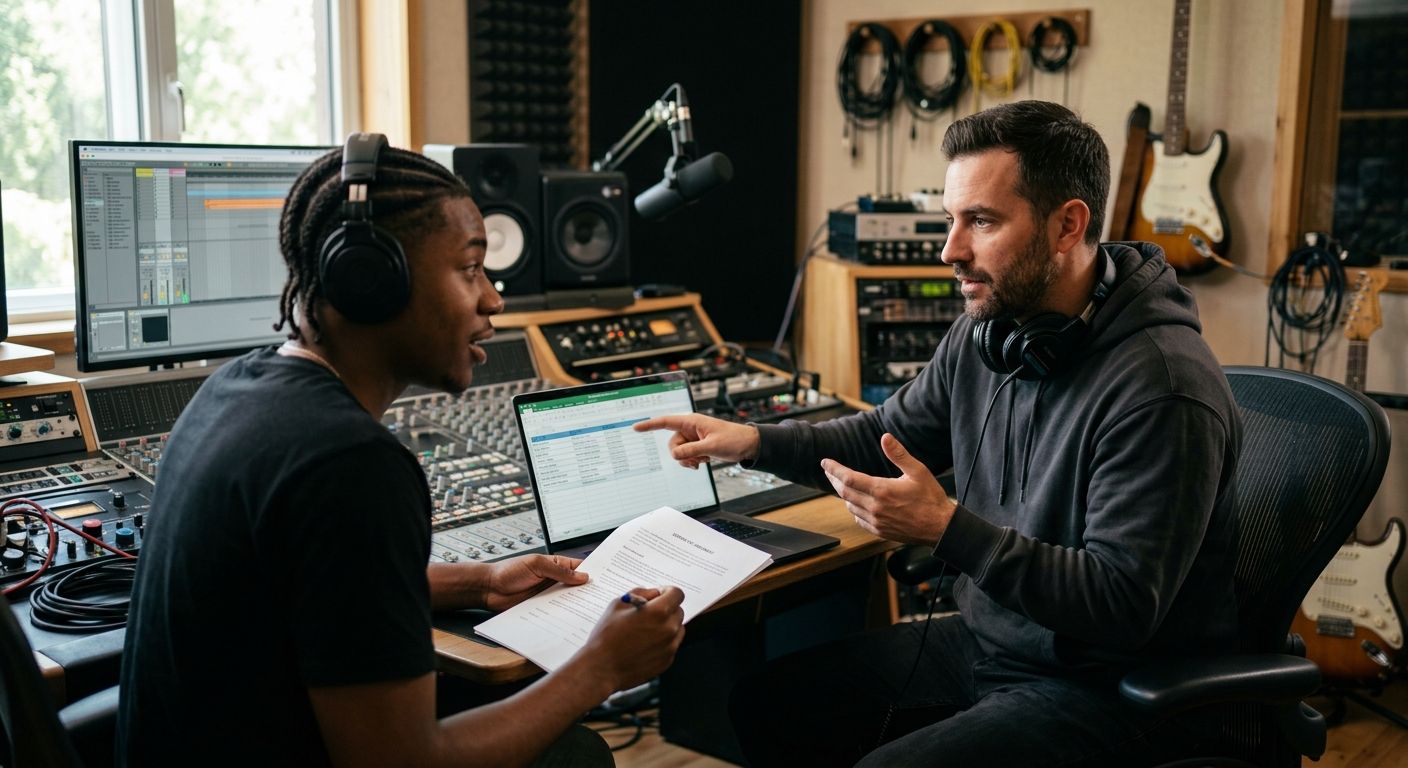
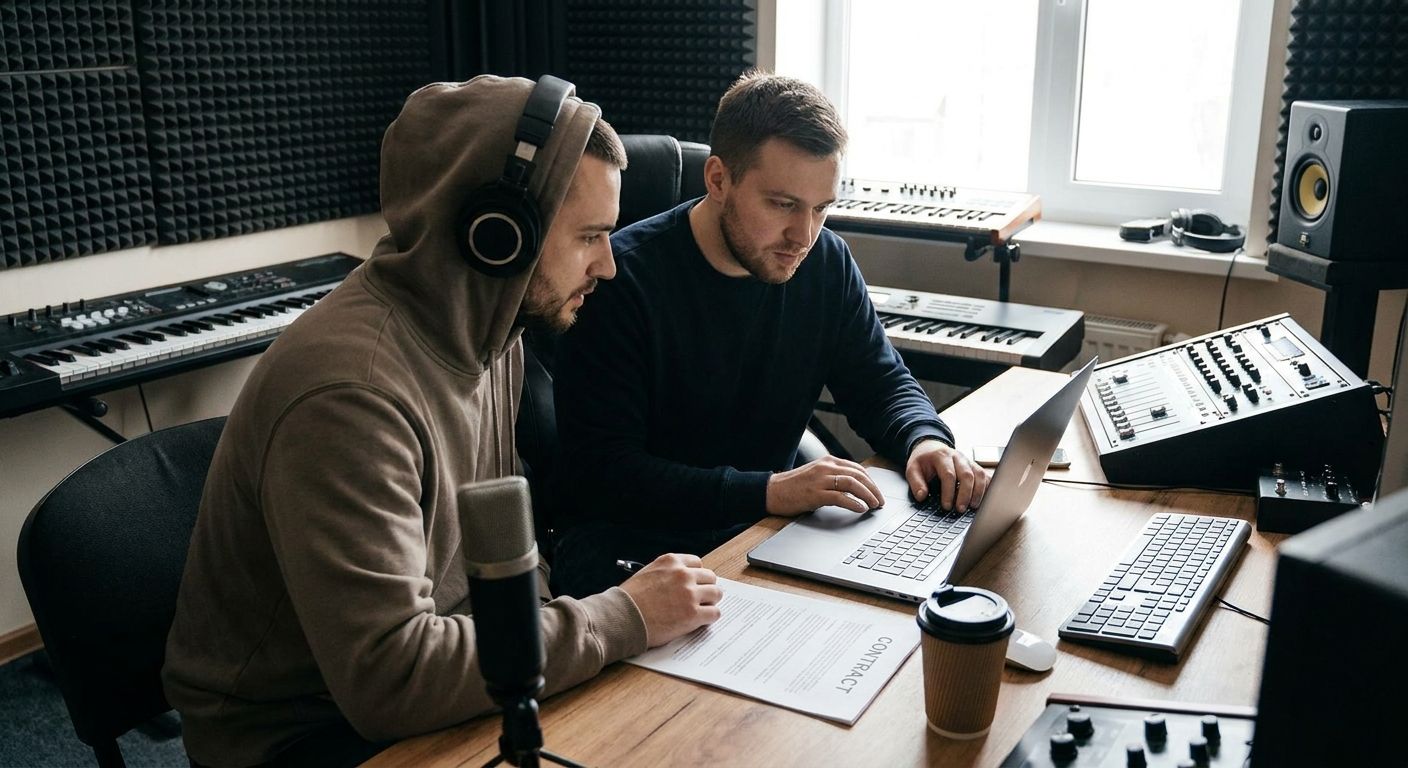
- Lock the session with an agreement. This is where work-for-hire terms and copyright transfer get written down — not implied, not assumed.
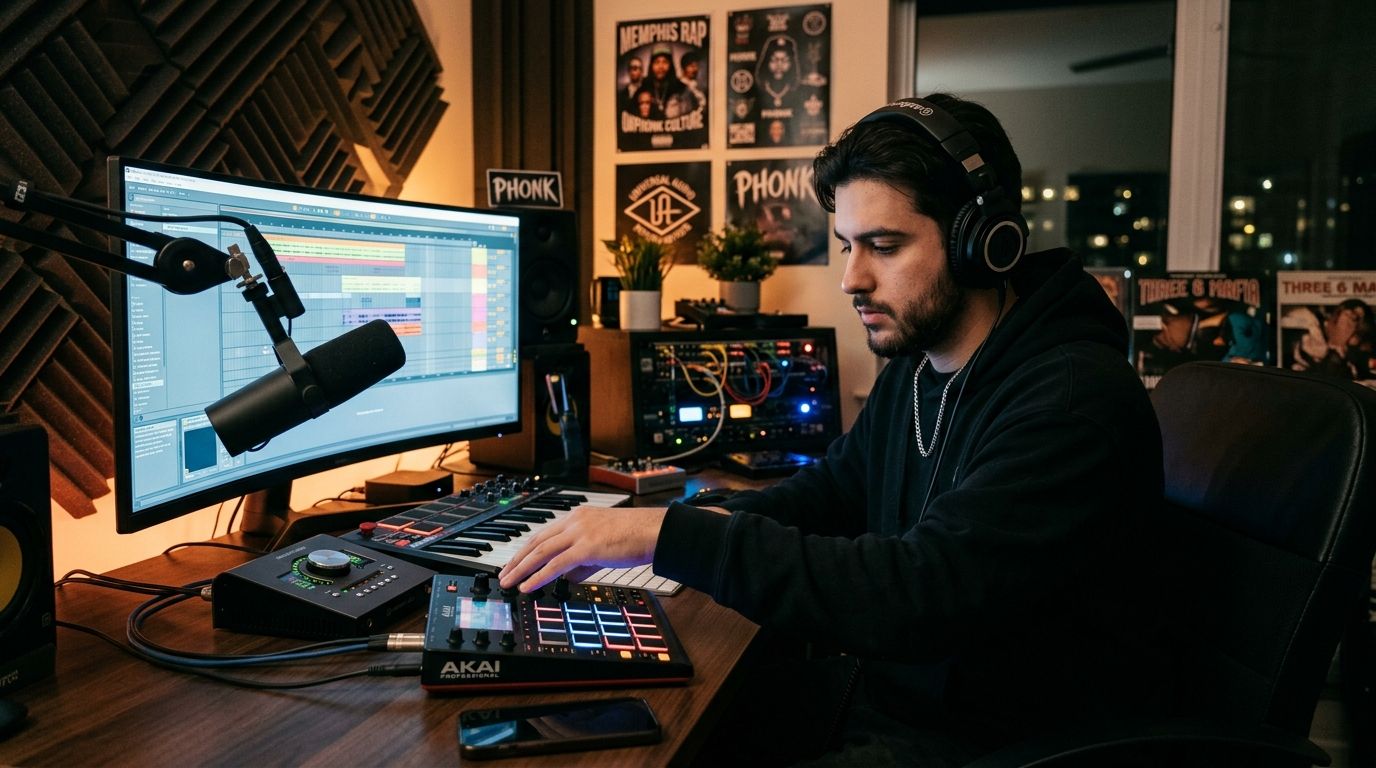
- Attend or brief the session. Some artists sit in remotely with real-time feedback; others send a full brief and let Louie build independently.
- Review and receive deliverables. You review the bounce, request changes within the agreed scope, then get final stems and masters once it's signed off.
That's the whole loop. Six steps, no guesswork, and the ownership conversation happens at step one instead of step six.
Custom beat production, mixing/mastering, and recording — how the services compare
| Service | What you get | Best for |
|---|---|---|
| Custom beat production | An original instrumental built around your reference and vision, not pulled from a catalog | Artists who need a beat nobody else can buy — best for exclusive singles, EPs, and album cuts |
| Mixing and mastering add-on | A balanced mix and master applied to your recorded vocal over the finished beat | Artists who already have vocals tracked and need the release polished before drop day |
| Audio recording session | Vocal tracking, often paired directly with a custom beat build | Artists without home studio gear who need to record over the instrumental in the same workflow |
All three can be booked as one continuous project or separately — check custom production packages for an EP if you're stacking multiple tracks under one deal.
Why booking requirements vary
No two custom beat sessions look the same because the inputs change every time. What actually drives the scope of a booking:
- License type — lease versus exclusive buyout changes the contract, the price structure, and what you can legally do with the beat afterward.
- Genre and mood — trap, boom bap, drill, lo-fi, and R&B all call for different arrangement approaches and different reference tracks.
- Project format — a single needs one beat and one turnaround; a mixtape or album needs a consistent sonic thread across multiple custom builds.
- Whether recording is included — booking vocals in the same session as the beat build changes scheduling versus a beat-only order.
- Whether mixing/mastering is bundled — a raw instrumental delivery is a different scope than a fully mixed and mastered final track.
- Revision needs — vague references mean more back-and-forth before the beat locks in; tight references mean fewer rounds.
“If you don't get full copyright transfer in writing, you don't own the beat.”
Do I need to buy an exclusive license to book a custom session?
No — you can book custom production under a lease, but you won't hold full ownership of the track. If owning your masters outright matters for your release, the exclusive buyout with full copyright transfer is the option that gets you there, not the lease.
Can I request a specific reference artist or sound for my session?
Yes, and it's the fastest way to cut down revision rounds. Naming a reference artist or linking a track gives Louie a concrete target instead of a vague mood description, which shortens the path from brief to approved beat.
What's the real difference between leasing a beat and booking custom production?
Leasing means buying rights to use an existing beat someone else can also license; custom production means building a new instrumental specifically for you. If you already know the exact style you want but don't need exclusivity, check beat licensing options for independent artists before booking a full custom session.
Lock in your custom beat session
Send your reference and pick your license type before the first bounce.
FAQ
What's the best way to book a custom beat session in 2026?
The best way is to settle on your license type first, then send Louie a reference track and mood before any production starts. Sessions booked this way in 2026 tend to need fewer revision rounds because the target is clear from step one.
Is a custom beat session better than buying a pre-made type beat?
A custom session is better when you need a beat nobody else can own or use, since a type beat purchase means other artists can license the same track. Pre-made beats are faster and cheaper for artists who just need something usable now.
How much information do I need to give before a custom session?
Give Louie a reference artist or track, your preferred mood or genre, and whether you need vocals recorded in the same session. The more specific this brief is, the fewer changes you'll need after the first bounce.
Can I request revisions after the beat is delivered?
Revision terms get set in the booking agreement before the session starts, so check that scope when you lock the session. Vague references at the start usually mean more revision requests later.
Do I own the beat after a custom production session?
You only own the beat outright if the agreement includes full copyright transfer, not just an 'exclusive' label without that language. A lease, even an exclusive-sounding one, doesn't automatically mean you hold the copyright.
What's the difference between leasing and an exclusive buyout?
A lease lets you use a beat under limited terms while ownership stays with the producer; an exclusive buyout with full copyright transfer makes the beat yours and takes it off the market. That difference decides what you can legally do with the track after release.
Do I need to book a separate mixing and mastering session?
Not if you bundle it into the same custom production booking — mixing and mastering can be added as part of one project instead of a separate appointment. Bundling it upfront usually means a tighter final master since the mix engineer already knows the source instrumental.
Can I book a recording session at the same time as a custom beat?
Yes, audio recording sessions can run alongside custom beat production so vocals get tracked directly over the new instrumental. This works well for artists without home studio gear who want the whole project handled in one workflow.
One last thing
The single biggest mistake artists make booking a custom beat session isn't picking the wrong genre — it's skipping the ownership conversation because the beat sounds so good they forget to ask what they're actually buying. Read the license terms before you send a deposit, not after the file lands in your inbox. In 2026, with distribution this easy, a beat you don't fully own is a liability the moment the track starts moving.