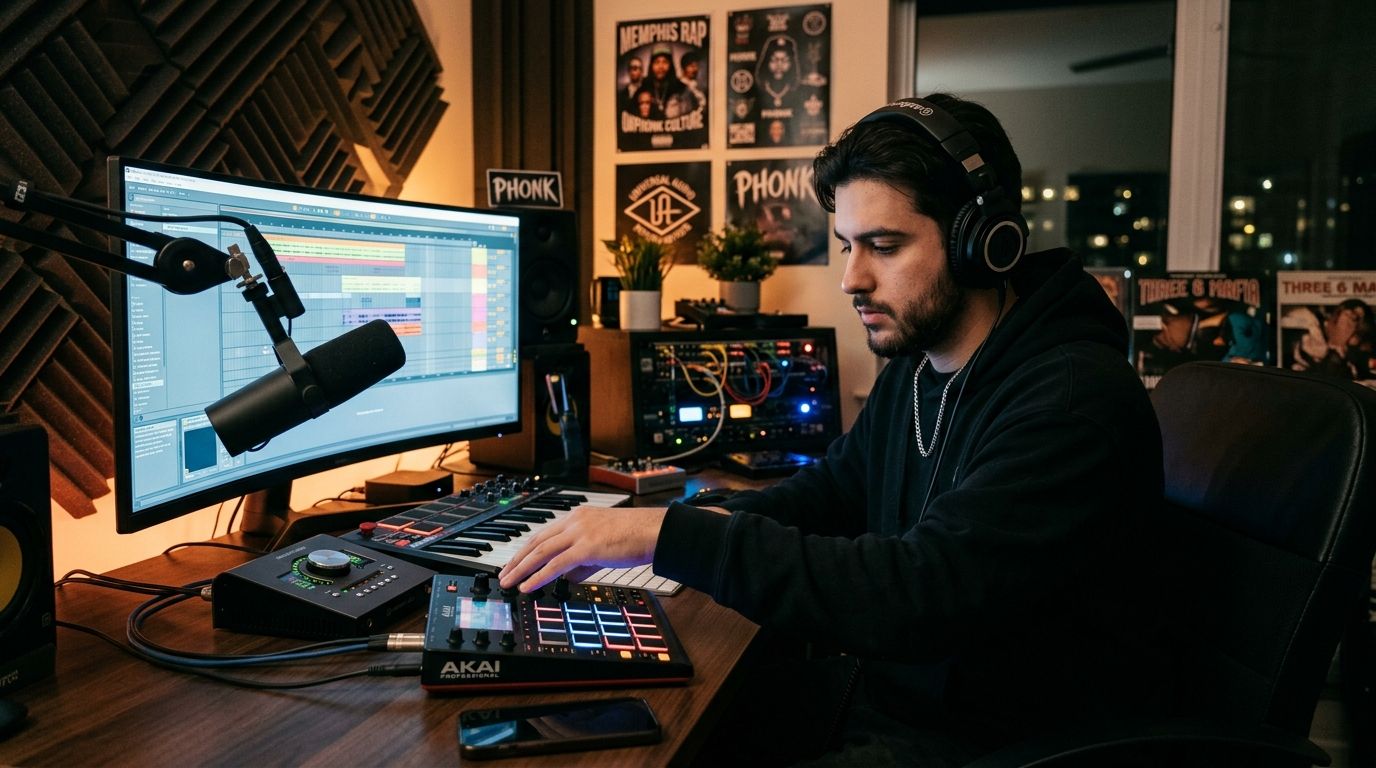
Phonk beats for phonk artists means dark, distorted trap-adjacent instrumentals built around chopped Memphis rap vocal samples, cowbell one-shots, and gritty 808 bass — engineered specifically for the drift-phonk and cowbell-phonk sound that dominates TikTok and Memphis-revival playlists in 2026. Phonk artists need something most rap producers skip: analog tape hiss, VHS-style saturation, and vocal chops pitched down until they sound haunted, not clean.
A standard trap or boom bap producer can hand you a polished beat. A phonk artist needs a beat that sounds broken on purpose.
- Custom beats for phonk artists need cowbells, pitched Memphis vocal chops, and 130-150 BPM tempos — generic trap beats don't cut it.
- Louie The Producer builds custom phonk beat sessions with full copyright transfer, not a leased loop pack.
- Exclusive rights protect your master from resale to other artists — always confirm ownership terms before you drop.
- Mixing and mastering distorted 808s requires different limiter settings than clean trap mixes — get it wrong and the low end folds.
Why custom beats matter for phonk artists
Phonk built its 2026 momentum on short-form video — TikTok drift edits, car meet clips, and cowbell-loop remixes that spread faster than a single ever could on streaming alone. That means a phonk artist's beat gets judged in the first 3 seconds of a scroll, not the first verse.
Generic type beats bought off a marketplace often get reused by dozens of other artists, which kills a phonk drop before it starts — the whole subculture runs on that one distinct, recognizable loop. A custom beat solves that: it's built once, for one artist, and it isn't sitting in someone else's cart tomorrow.
Define your phonk sound before you book a session
Phonk isn't one sound — cowbell phonk, drift phonk, and dark phonk all pull from different reference points. Walk into a custom session knowing which lane you're in.
- Pick 3-5 reference tracks that match the mood you want (dark, aggressive, nostalgic)
- Decide if you want heavy Memphis sample chops or a cleaner modern-trap hybrid
- Note whether you want vocal tags, cowbell one-shots, or both layered
- Write down your target BPM range so the producer isn't guessing
Build a reference pack of cowbell and Memphis samples
Producers work faster and cheaper when you show up with material instead of describing a vibe from scratch.
- Save 5-10 cowbell loop examples you like from other phonk tracks
- Screenshot timestamps of specific vocal chops that hit the way you want
- Flag any DJ Screw or Three 6 Mafia-style sample textures you're referencing
- Bring one or two full tracks as tempo and mix-loudness benchmarks
Lock your BPM and mixing style
Phonk generally sits around 130-150 BPM, slower than a lot of mainstream trap, with a swung, dragging feel that gives the cowbell room to breathe.
- Confirm BPM before recording so vocals don't fight the drag of the beat
- Ask for distorted, saturated 808s rather than clean sub-bass
- Request the drums sit slightly behind the beat for that dragged pocket
- Decide if you want a VHS-style filter pass on the whole mix
Book a custom beat production session
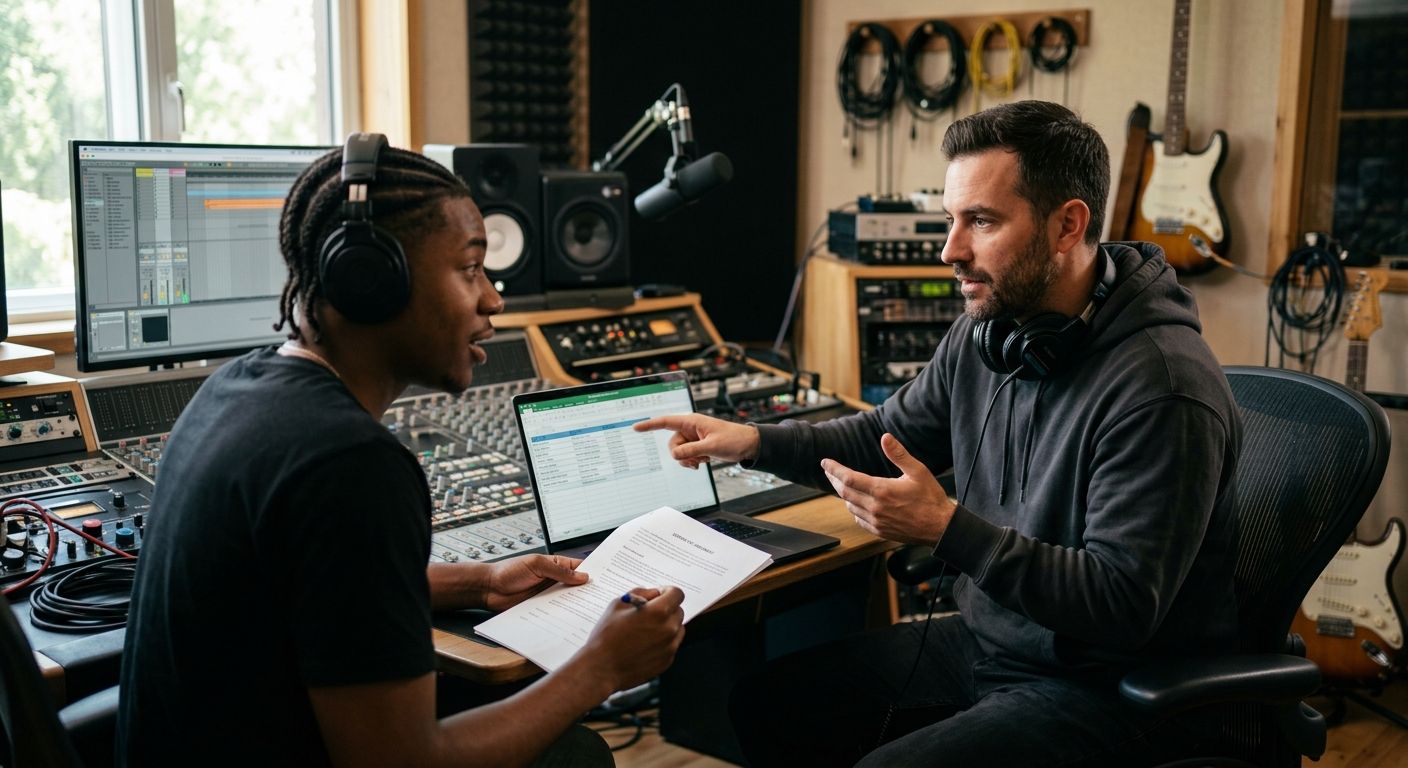
Once your reference pack and BPM are locked, the fastest path from idea to finished beat is a direct session instead of digging through stock catalogs for something close enough. Louie The Producer runs custom beat production sessions built around your references, not a pre-made template, which matters most for a genre this specific about texture and drag.
- Bring your reference pack and BPM notes into the session
- Ask upfront whether the deliverable includes stems or a bounced master only
- Confirm turnaround time before booking, not after
- Clarify whether revisions are included or billed separately
Choose exclusive vs leased rights
Rights matter more in phonk than most genres because the sound is so easy to clone — an exclusive beat locks out anyone else from dropping the same instrumental under a different name.
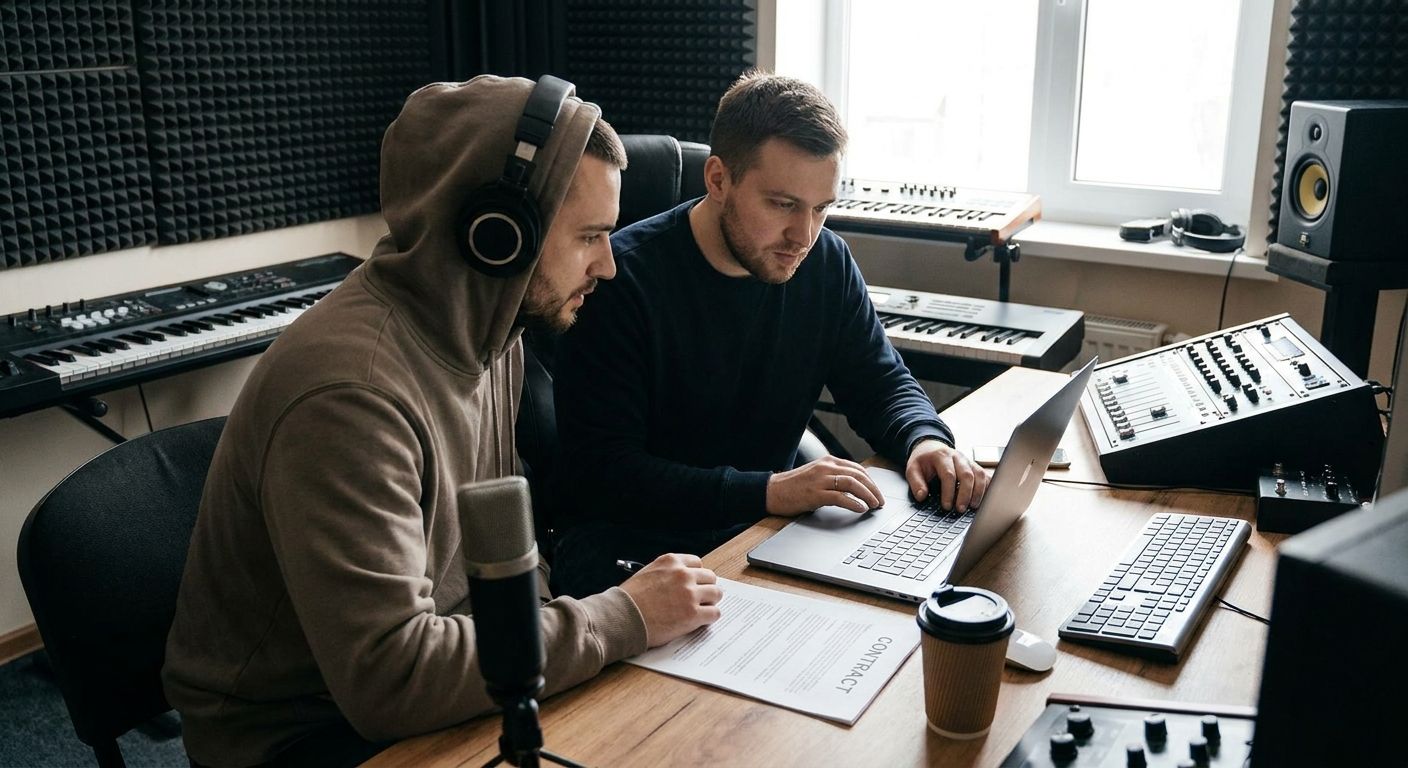
- Read the license terms line by line before paying anything
- Confirm whether the agreement is work-for-hire or a lease with usage caps
- Check if the beat can be pulled from sale to other artists once purchased
- Ask about stream count caps or platform restrictions in leased deals
If you're not sure how the two options differ in practice, buying exclusive beats online as an independent rapper breaks down what changes once you own the master versus lease it.
Prep your vocal stems for mixing and mastering
Distorted phonk instrumentals eat vocals that aren't recorded and organized cleanly — the saturation on the beat has nowhere to sit if the vocal take is messy.
- Record dry vocals with no reverb baked in before sending for mixing
- Label stems clearly (lead, adlibs, hook) so nothing gets lost
- Send a reference track showing how loud you want vocals against the beat
- Flag any spots where you want the vocal pitched or chopped like the beat itself
For the mix side specifically, mixing and mastering for a rap mixtape release covers loudness targets and stem prep that apply directly to phonk drops.
Release and protect your masters
A custom phonk beat is worthless as an asset if you can't prove you own it once the track blows up on a drift edit or a TikTok remix.
- Keep the signed agreement or invoice from every custom session
- Register the finished track's copyright once it's released
- Confirm the producer isn't retaining resale rights on your exclusive
- Store your stems and contracts somewhere outside a single device
Before signing anything, leasing hip-hop beats without losing your rights is worth a read even if you're going the exclusive route — it shows what rights clauses actually protect.
Comparison: where phonk artists get beats in 2026
| Option | Best for | Key limitation |
|---|---|---|
| Type beat marketplaces | Fast, cheap first drops | Same beat can sell to multiple artists |
| DIY sample packs | Producers who mix their own | Requires DAW skill and time you may not have |
| Custom beat production (Louie The Producer) | Artists who want a signature, unshared sound | Costs more upfront than a leased loop |
| Exclusive beat leasing sites | Mid-budget artists wanting ownership without a live session | Turnaround depends on the seller's queue |
Verdict: custom beats for phonk artists win on distinctiveness — a marketplace type beat gets you a sound fast, but a custom session with Louie The Producer gets you a sound nobody else can drop.
Book your custom phonk beat session
Bring your references, lock your BPM, walk out with an exclusive track.
Common mistakes phonk artists make
- Buying a clean trap beat and trying to make it sound phonk in the mix. The distortion and drag need to be baked in during production, not patched on after.
- Skipping the reference pack. Showing up to a session with "just make it dark" wastes time and money compared to bringing 3-5 tracks that pin down the exact texture.
- Ignoring rights language on leased beats. A phonk beat that goes viral on a leased license with stream caps can get pulled or flagged right when it matters most.
- Recording vocals too polished for a gritty instrumental. A pristine vocal take sitting on top of a saturated 130 BPM cowbell beat sounds mismatched, not intentional.
- Skipping mastering because the beat is already "loud." Distorted 808s clip fast — mastering for phonk needs different limiter handling than a clean trap master.
FAQ
What BPM should custom beats for phonk artists be?
Most phonk beats sit around 130-150 BPM with a dragged, swung feel. Confirm the exact range with your producer before recording so vocals match the pocket.
Is a custom phonk beat better than a type beat from a marketplace?
A custom beat is better for artists who need a sound nobody else can drop, since type beats often get resold to multiple buyers. Marketplace type beats are faster and cheaper for quick, low-stakes drops.
Do I need exclusive rights for a phonk beat?
Exclusive rights stop the same beat from being sold to another artist, which matters more in phonk because the sound is easy to imitate and reuse. Leased beats work fine for early drops but carry usage caps.
How much does custom beat production cost in 2026?
Pricing varies by producer and session scope, so check current rates directly with the producer before booking. Confirm whether stems, revisions, and mixing are included in the quoted price.
Can I convert a leased phonk beat to exclusive later?
Some producers allow upgrading a leased beat to exclusive rights after the fact, but terms depend on the original agreement. Ask about conversion terms before signing the initial lease.
Does mixing and mastering differ for phonk versus regular trap?
Yes — distorted 808s and cowbell layers need different limiter and saturation handling than clean trap low end. A mix built for clean trap often clips or thins out on a phonk master.
Do I own the master if I book a custom beat session?
Ownership depends on the agreement signed at booking — work-for-hire sessions typically transfer full copyright to the artist. Always confirm this in writing before the session, not after.
One last thing
The cowbell one-shot is doing more work than the 808 in most phonk tracks that actually spread on TikTok in 2026 — artists who skip it to focus purely on bass end up with a beat that sounds like trap wearing a phonk filter, not phonk itself.