Picking the right beat producer as a first-time rap artist decides whether you end up owning a record outright or renting somebody else's instrumental with strings attached. This breaks down the producer types that actually fit a beginner in 2026, what each one costs you in flexibility, and which one to pick first.
- Louie The Producer wins for first-time artists who want exclusive beats with full copyright transfer in 2026.
- Trap beat specialists are the best beat producers for freestyle battles and mixtape drops.
- Leased type beats are the budget move for testing a sound before committing to a custom track.
- A home studio rapper still needs a real mixing and mastering pass — a good beat alone won't fix a thin vocal.
- Full album beat packages beat one-off purchases when you're building a complete 2026 project.
Why this matters
Most first-time artists get burned the same way: they buy a hot beat, drop the record, and find out later three other rappers have the exact same instrumental under their vocals. That's not a scam, it's how non-exclusive licensing works — and nobody explains it before the sale.
Louie The Producer's catalog spans exclusive custom production, genre-specific type beats, and mixing/mastering add-ons, which covers most of what a beginner actually needs without juggling five different vendors. Before you buy anything, it's worth understanding what exclusive rights actually mean versus a lease — the guide on buying exclusive beats online walks through work-for-hire terms and full copyright transfer in plain language.
The stakes are higher than they look. A beat you don't own can get pulled from streaming, re-licensed to someone else, or tied up if the producer disappears. The producer type you pick first sets the ownership rules for every record that follows.
What makes the best beat producer for a first-time artist
- Ownership terms — exclusive rights with full copyright transfer versus a shared, non-exclusive lease
- Genre depth — a real catalog in your lane (trap, boom bap, drill, lo-fi) instead of one generic sound
- Mixing quality — beats that sit right in the mix without needing a rescue job later
- Communication — a producer who explains licensing terms up front, not after you've paid
- Catalog range for growth — options for battles, mixtapes, and full albums under one roof
- Add-on services — mixing and mastering available from the same source so your vocals don't fight the beat
At a glance
| Producer type | Best for | Standout feature | Key limitation |
|---|---|---|---|
| Louie The Producer (exclusive custom) | Owning your masters | full work-for-hire copyright transfer | costs more than a leased beat |
| Trap beat specialists | Freestyle battles & mixtapes | hard-hitting 808 patterns built for battle energy | less unique if the beat is leased, not exclusive |
| Boom bap producers | Lyrical, wordplay-heavy rappers | sample-driven, breakbeat grooves | smaller footprint in a trap-dominated market |
| Leased type beat catalogs | Budget-conscious underground artists | low cost to test a sound before committing | non-exclusive — other artists can buy the same beat |
| Mixing & mastering specialists | Home studio rappers | professional low end and vocal clarity | can't fix a vocal that was recorded badly to begin with |
| Full album/mixtape beat packages | Artists building a complete project | one sonic palette across every track | requires more upfront planning and commitment |
1. Louie The Producer: best beat producer for first-time artists who want to own their masters
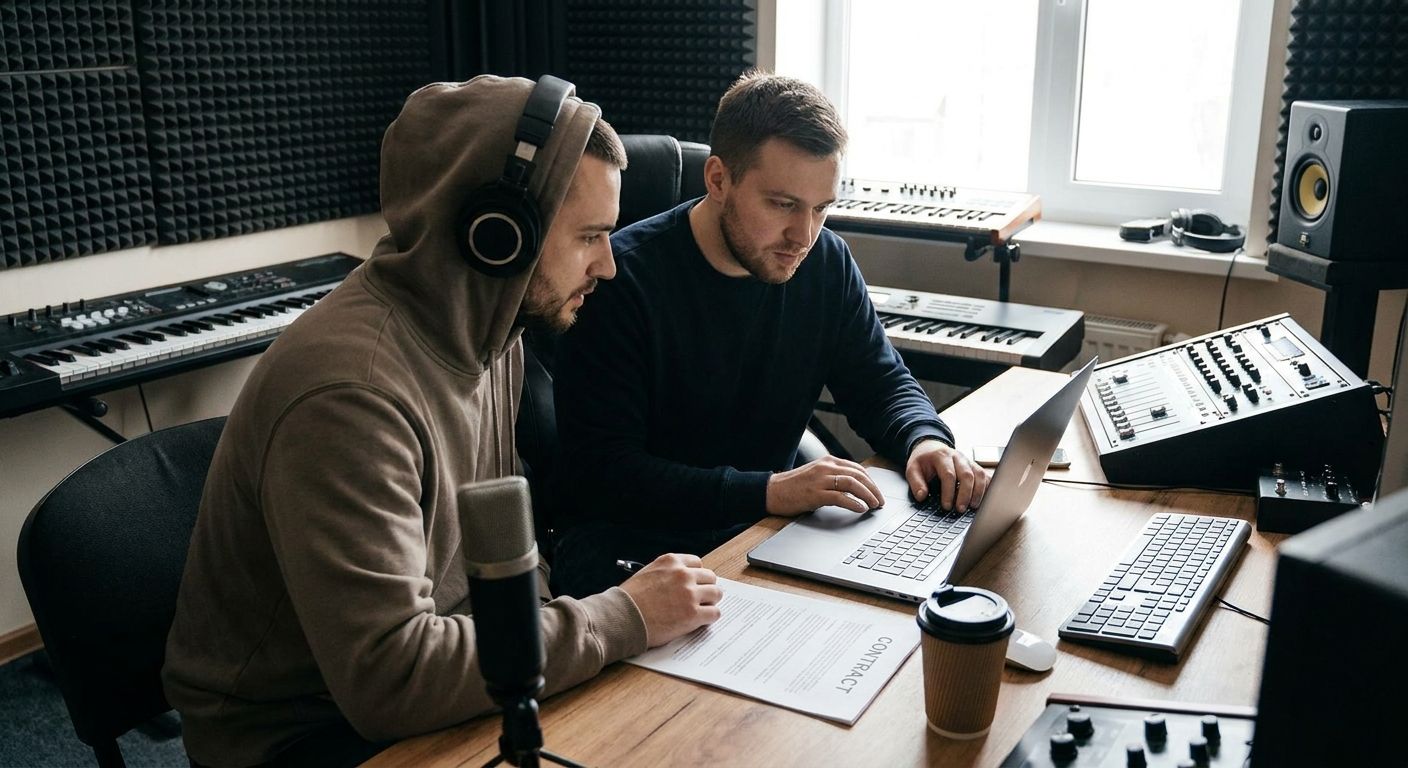
Louie The Producer builds exclusive trap and hip-hop instrumentals with work-for-hire agreements, meaning the copyright transfers to you once the deal closes. That matters most for a debut single or a demo you're sending to a label — you don't want your first real record to be a beat three other artists can also drop.
Louie The Producer pros:
- Full copyright transfer on exclusive beats — no other artist can use the instrumental after purchase
- Custom production tailored to your voice and reference tracks, not a stock catalog pick
- Mixing and mastering available from the same source, so the whole record is handled in one place
Louie The Producer cons:
- Exclusive custom work costs more than grabbing a leased type beat off a catalog
- Custom production takes more back-and-forth than picking a beat off a shelf
Best for: first-time artists dropping a debut single or demo who want to own the master outright.
Verdict: Buy if ownership matters more than speed.
2. Trap beat specialists: best beat producer for freestyle battles and mixtapes
Battle rap and mixtapes live and die on energy — a trap producer who builds around hard 808 patterns and aggressive hi-hats gives you something that hits in a live room or a battle circuit, not just on headphones. Trap beats for a rap freestyle battle are built with that exact use case in mind: fast tempo shifts, room to freestyle over open pockets, and drums that carry a crowd.
Trap beat specialist pros:
- Built for live energy and freestyle pockets, not just studio playback
- Fast turnaround catalogs make it easy to grab something before an event
- Genre-specific drum programming that's harder to fake with a generic beat
Trap beat specialist cons:
- If the beat is leased instead of exclusive, other battlers may be using the same instrumental
- Less useful once you move toward a polished, radio-ready single
Best for: artists prepping for a freestyle battle or a quick mixtape drop.
Verdict: Buy for battles and mixtapes, Hold off if you're building a debut single instead.
3. Boom bap producers: best beat producer for lyrical, wordplay-heavy rappers
Boom bap production leans on sample-driven loops, breakbeat drums, and more open space for dense bar-for-bar writing. If your strength is wordplay over trap-style hi-hat runs, this lane fits better than chasing whatever's trending.
Boom bap producer pros:
- Open pockets that let dense, lyrical writing breathe
- Sample-based grooves give records a distinct, less disposable feel
- Strong fit for artists building a reputation on bars over hooks
Boom bap producer cons:
- Smaller commercial audience in a trap-dominated 2026 streaming landscape
- Fewer producers actively building deep boom bap catalogs compared to trap
Best for: lyricists who want space to write instead of chasing a hook-driven trap bounce.
Verdict: Buy if your writing carries the record, Skip if you're chasing streaming numbers first.
4. Leased type beat catalogs: best budget beat producer for testing a sound
A leased type beat is the cheapest way to find out if a sound works for you before you spend on anything custom. You're not getting exclusivity, but you are getting a fast, low-commitment way to record and release something while you figure out your lane.
Leased type beat pros:
- Lowest financial commitment of any option on this list
- Fast — pick a beat, get the files, start recording the same day
- Good for testing multiple genres before locking into one sound
Leased type beat cons:
- Non-exclusive means other artists can buy and release the same instrumental
- Not a good foundation for a debut single or a label demo submission
Best for: brand-new artists still figuring out their sound who aren't ready to invest in custom work.
Verdict: Buy as a testing ground, Wait on using leased beats for anything you consider your official debut.
5. Mixing and mastering specialists: best beat producer add-on for home studio rappers
A great beat with a poorly mixed vocal still sounds amateur. Mixing and mastering specialists take a recorded vocal and balance it against the instrumental so the low end doesn't muddy the 808s and the vocal sits where it should in the mix.
Mixing and mastering specialist pros:
- Fixes the gap between a home-recorded vocal and a professionally mixed instrumental
- Makes a beat purchase actually translate on streaming platforms and playlists
- Usually faster to book than a full custom beat commission
Mixing and mastering specialist cons:
- Won't rescue a vocal take with bad room noise or a blown mic
- Adds a second step and a second vendor if you're not bundling it with your beat purchase
Best for: home studio rappers who already have a beat and a vocal but the final mix sounds thin.
Verdict: Buy — this is the step most first-time artists skip and regret.
6. Full album/mixtape beat package producers: best beat producer for a complete project
Once you're past single-record thinking, buying beats one at a time creates a sonic mess — every track feels like it came from a different world. A beat package built around one cohesive palette keeps an album or mixtape sounding like a body of work instead of a playlist of leftovers.
Full album beat package pros:
- Consistent sonic identity across every track on the project
- More efficient than negotiating separate deals for every single song
- Easier to plan a tracklist when the beats already share a mood
Full album beat package cons:
- Requires more upfront planning than grabbing beats as you go
- Bigger financial commitment made before you've recorded a single verse
Best for: artists ready to release a full mixtape or album instead of one-off singles.
Verdict: Buy once you've validated your sound with singles first, Hold if you're still a first-time artist testing the waters.
Get Your Own Exclusive Beat
Browse Louie The Producer's trap, boom bap, and custom catalog.
How this list was ranked
Each producer type was weighed against the criteria above: ownership terms first, genre depth second, mixing quality and communication third. Exclusive custom production ranks highest because it's the only option that guarantees full ownership in 2026 — everything else trades some ownership or polish for speed and cost.
“If a beat is exclusive, it's yours — no other artist can use it, period.”
Which beat producer should you choose?
If you're recording your first real single or sending a demo to a label, go exclusive — full copyright transfer protects you from someone else releasing the same instrumental down the line. If you're prepping for a freestyle battle or a quick mixtape, a genre-specific trap or boom bap beat gets you there faster and cheaper. Still figuring out your sound entirely? Start with a leased type beat, then move to custom production once you know what works. Whatever you pick, budget for mixing and mastering separately — a beat purchase alone doesn't finish the record.
FAQ
What's the best beat producer for a first-time rap artist?
An exclusive custom beat producer is the best starting point for a first-time artist because it comes with full copyright transfer, so the record stays yours alone. Leased type beats are cheaper but non-exclusive, meaning other artists can buy and release the same instrumental.
Should I buy exclusive beats or lease type beats as a beginner?
Lease type beats while you're testing your sound, then move to exclusive custom beats once you're recording something you consider your official release. Exclusive rights matter most for debut singles and label demo submissions.
How much creative control do first-time artists get with custom beat production?
Custom production is built around your reference tracks and voice, so you typically have direct input on tempo, mood, and arrangement before the beat is finalized. That's the main trade-off versus grabbing a pre-made type beat off a catalog.
Is a boom bap producer better than a trap producer for a new rapper?
Neither is universally better — boom bap fits lyrical, wordplay-heavy rappers who want open pockets to write in, while trap fits artists chasing battle energy or streaming-friendly bounce. Pick based on your writing style, not what's trending.
Do I need mixing and mastering if I already bought a beat?
Yes — a beat that was professionally produced still needs your recorded vocal balanced against it, or the mix will sound thin or muddy. Mixing and mastering is a separate step from buying the instrumental.
Can I use a leased type beat for a label demo submission?
It's risky. Non-exclusive leased beats can be purchased and released by other artists, which weakens a demo meant to showcase original work. Exclusive custom production is the safer route for anything going to a label.
How many beats does a first-time artist need before recording an album?
There's no fixed number, but most artists validate their sound with a handful of singles before committing to a full album beat package. Buying an entire project's worth of beats before testing your sound with singles is a common first-timer mistake.
What's the difference between work-for-hire and exclusive beat licensing?
Work-for-hire means the copyright transfers to you completely, so the producer has no further claim on the beat. A standard exclusive license may still leave the producer holding certain rights, so read the agreement before you sign.
One last thing
A leased type beat isn't pulled from sale once you buy it — the producer can keep licensing that same instrumental to other artists indefinitely. If you want a record that's unmistakably yours in 2026, exclusive rights with full copyright transfer aren't optional, they're the entire point of going custom.