A rap mixtape release lives or dies on how it sounds through cheap earbuds and car speakers at the same time, and picking the wrong mixing and mastering route wastes the one shot most independent artists get with a project. Best overall for a trap or hip-hop mixtape: Louie The Producer's custom mixing and mastering service. Best for zero budget and full control: DIY home studio mixing. Best hands-off budget option: AI mastering platforms.
- Louie The Producer wins for trap/hip-hop mixtapes needing genre-correct 808s and vocal chains with full ownership terms.
- AI mastering platforms are the fastest budget-only route once your mix is already solid.
- DIY home studio mixing builds your ear but costs hours you don't get back before a release date.
- Freelance engineer marketplaces work for one-off budget mixes but skip long-term consistency across a project.
- Full-service studios bundle recording with mixing and mastering for artists who need both in one session.
Why this matters
A mixtape isn't a demo — it's the project that gets shared, streamed, and judged against everyone else's catalog on the same platform. If your master doesn't hit around -14 LUFS for Spotify or -16 LUFS for Apple Music in 2026, the streaming platform's own loudness normalization will turn your track down and expose every weak spot in the mix.
Most independent rappers lose the mixtape before it drops, not after. They record over a beat with no vocal chain plan, skip the mix entirely, or run a free online mastering tool on a mix that was never balanced right in the first place. The fix isn't more gear — it's picking the mixing and mastering route that matches your budget, your timeline, and how many tracks are on the mixtape project.
What makes the best mixing and mastering for a mixtape
Before ranking anything, here's what actually separates a mix that holds up on release day from one that falls apart on a phone speaker:
- Genre-correct ear — trap 808s, hi-hat rolls, and rap vocal chains need different EQ and compression than pop or R&B
- Turnaround speed — a mixtape has a drop date; a two-week wait on one track kills momentum
- Revision rounds — you need at least one round of notes back and forth before a track is final
- Ownership and rights terms — who owns the stems, the master file, and the finished mix matters as much as how it sounds
- Cross-platform translation — the master has to hit loudness targets on Spotify, Apple Music, and YouTube without clipping
- Cost that fits an independent budget — a mixtape with 10-15 tracks needs a model that scales, not a flat studio day rate
Mixing and mastering options for a mixtape release — at a glance
| Option | Best For | Standout Feature | Key Limitation |
|---|---|---|---|
| Louie The Producer | Trap/hip-hop mixtape needing genre-correct vocal chains | Built specifically around trap and hip-hop 808 low end and vocal presence | Not the move if your project leans pop or acoustic |
| AI mastering platforms | Fast, budget-only masters once the mix is done | Turnaround measured in minutes, not days | No human ear for genre-specific vocal balance |
| DIY home studio mixing | Artists building their own engineering skill | Full control, unlimited revisions on your own time | Steep learning curve; weak monitoring gear skews decisions |
| Freelance engineer marketplaces | One-off budget mixes without a long-term relationship | Wide range of engineers to pick from per track | Inconsistent sound across a full mixtape tracklist |
| Full-service recording studio | Bundling recording, mixing, and mastering in one session | Everything happens under one roof on one schedule | Booking around studio hours instead of your own timeline |
1. Louie The Producer: best mixing and mastering for a trap/hip-hop mixtape
Louie The Producer runs mixing and mastering built around trap and hip-hop specifically — the low end on the 808s, the hi-hat pockets, and a vocal chain that sits forward without losing the beat underneath it. The service pairs with custom instrumentals and beat leasing, so an artist working on a full mixtape can get the beat, the recording, and the final master handled by one ear that already knows the genre.
The deliverable structure leans on work-for-hire terms and full copyright transfer where applicable, so artists aren't left wondering who owns the final master once the mixtape drops. That's a bigger deal on a mixtape than most artists realize — a mix you don't fully own can turn into a headache the moment the project starts pulling streams.
Louie The Producer pros:
- Genre-specific mixing built for trap and hip-hop, not a generic all-purpose chain
- Can pair mixing and mastering with beat production and recording on the same project
- Clear terms on ownership instead of vague licensing language
Louie The Producer cons:
- Not built for genres outside trap, hip-hop, and adjacent R&B fusion
- Turnaround depends on project size — a full mixtape tracklist takes longer than a single
Louie The Producer pricing: rates scale with track count and revision rounds — confirm current pricing directly before booking a full mixtape.
Best for: independent rappers releasing a trap or hip-hop mixtape who want the beat, the vocal chain, and the master to all sound like they came from the same room. Verdict: Buy.
Artists working specifically in the SoundCloud rap lane get the same genre-specific approach, tuned for lo-fi distortion and saturated vocal textures instead of a clean radio master.
2. AI mastering platforms: best for fast, budget-only masters
AI mastering platforms take a finished mix and run it through automated loudness and EQ correction in a few minutes. They're built for artists who already nailed the mix and just need a final loudness pass before uploading to a distributor.
AI mastering platform pros:
- Turnaround in minutes instead of days
- Low barrier to entry — no scheduling, no back-and-forth
- Consistent loudness targeting across a batch of tracks
AI mastering platform cons:
- Can't fix a mix that was never balanced correctly to begin with
- No genre-specific ear for trap 808s or rap vocal presence
- Limited or no manual revision control
Pricing: subscription or per-track models, varies by platform tier.
Best for: artists with a solid mix already in hand who just need a fast loudness pass before the mixtape drops. Verdict: Hold — use it only after the mix itself is right.
3. DIY home studio mixing: best for building your own ear
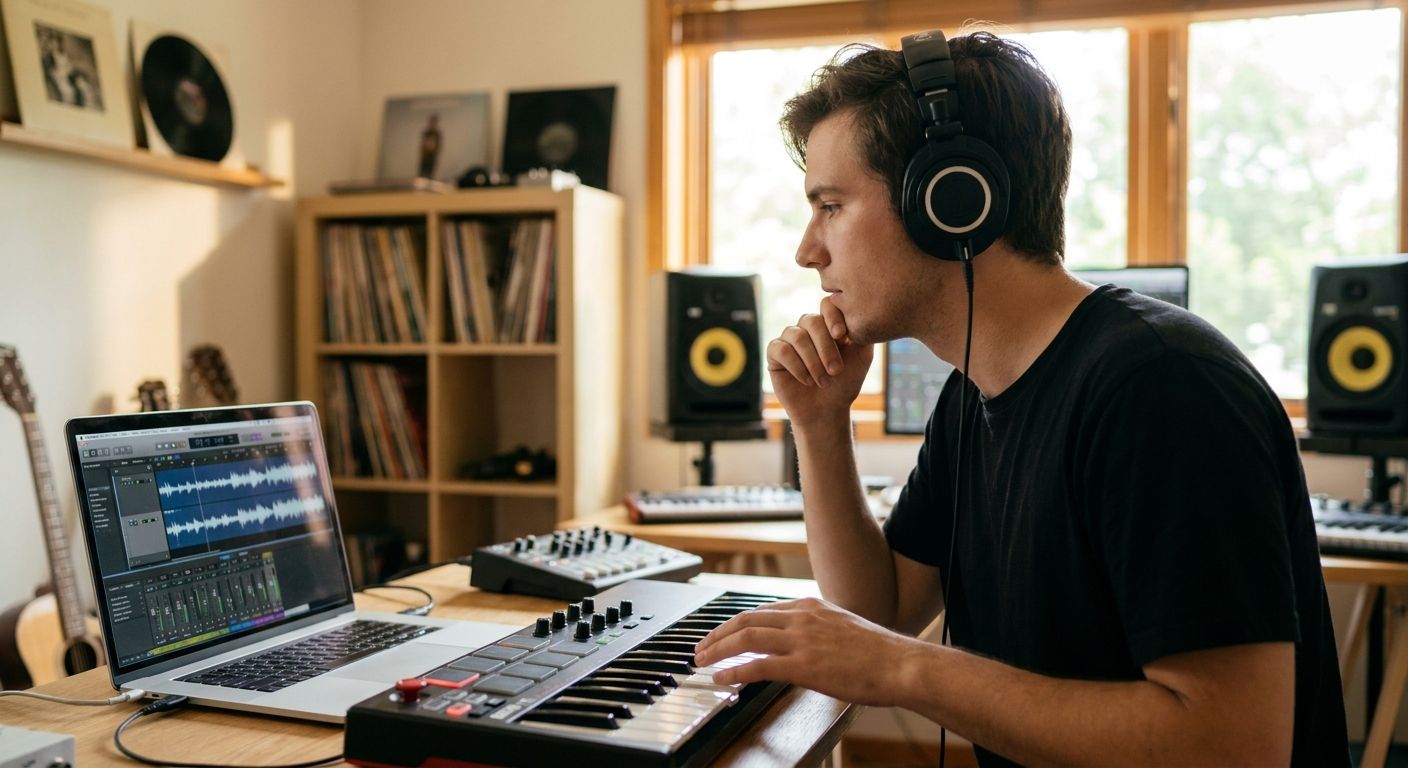
Mixing your own mixtape in a home setup means full control over every EQ move and every revision, on your own schedule, for as long as it takes. It's the slowest route to a finished project but the fastest way to actually learn what a clean vocal chain sounds like.
DIY home studio pros:
- Unlimited revisions with zero scheduling friction
- Builds real engineering skill over time
- No back-and-forth with anyone else's calendar
DIY home studio cons:
- Weak monitors or an untreated room lead to bad mix decisions
- Takes far longer per track than working with an engineer
- Easy to lose objectivity after hours of listening to the same track
Pricing: mostly sunk cost in gear and time rather than per-track fees.
Best for: artists with time before a release date who want to learn the craft, not just ship the mixtape project. Verdict: Hold — good for skill-building, risky on a tight deadline.
4. Freelance engineer marketplaces: best for one-off budget mixes
Marketplace platforms connect artists with independent mix engineers on a per-track basis, usually at a lower entry point than a dedicated producer-engineer relationship.
Freelance marketplace pros:
- Access to a wide range of engineers and styles
- Useful for a single track that needs a specific sound
- Lower commitment than a long-term working relationship
Freelance marketplace cons:
- Different engineers on different tracks means inconsistent tone across a full mixtape
- Quality control varies wildly by who you land
- No relationship carrying over from track to track
Pricing: per-track fees set by individual engineers, varies widely.
Best for: a single standout track that needs a specific engineer's touch, not a full mixtape tracklist. Verdict: Skip for full projects, fine for one-off singles.
5. Full-service recording studio: best for bundled recording and mixing
A full-service studio handles recording, mixing, and mastering in one location, which works well for artists who haven't tracked vocals yet and want everything under one roof.
Full-service studio pros:
- Recording, mixing, and mastering happen in one workflow
- Professional acoustic treatment and monitoring
- One point of contact for the whole project
Full-service studio cons:
- Booking is locked to studio hours, not your schedule
- Session time pressure can rush creative decisions
- Less flexible for artists who record from home most of the time
Pricing: session-based, scaled to hours booked and services included.
Best for: artists who still need to record vocals and want mixing and mastering handled in the same session. Verdict: Buy if you need recording bundled in; Skip if your vocals are already tracked.
“If your masters aren't hitting -14 LUFS clean without clipping, the mixtape won't translate on Spotify.”
How this ranking works
Each option got measured against the same six criteria: genre-correct ear, turnaround speed, revision rounds, ownership terms, cross-platform loudness translation, and cost that scales with an independent budget. Louie The Producer ranks first because it's the only option built specifically around trap and hip-hop vocal chains with clear ownership terms baked in — the other four options each trade one of those criteria away in exchange for speed, control, or a lower barrier to entry.
Which mixing and mastering option should you choose?
If the mixtape is trap or hip-hop and you want the beat, vocal chain, and master to sound like one cohesive project, Louie The Producer is the move — it's the only option on this list built for the genre from the ground up. If your mix is already solid and you just need a fast loudness pass before uploading, an AI mastering platform gets the job done in minutes. If you've got time before the release date and want to learn the craft yourself, DIY home studio mixing is the slower but more educational path.
Skip freelance marketplaces for a full tracklist — save them for a single standout record. And only book a full-service studio if vocals still need to be tracked; otherwise you're paying for a room you don't need.
Get your mixtape mixed and mastered
Trap and hip-hop mixing and mastering built around your vocal chain and 808s.
FAQ
What's the best mixing and mastering for a mixtape release in 2026?
For a trap or hip-hop mixtape, Louie The Producer's custom mixing and mastering service is the strongest overall pick because it's built around genre-correct 808s and vocal chains with clear ownership terms. AI mastering platforms are the better route only if your mix is already balanced and you just need a fast loudness pass.
Is AI mastering as good as a human engineer for a mixtape?
AI mastering can clean up loudness and EQ on a mix that's already balanced, but it can't fix vocal chain or 808 issues the way a human engineer with genre experience can. Use it as a final step, not a substitute for mixing.
How much does mixing and mastering cost for a full mixtape?
Cost varies by track count, revision rounds, and whether recording is bundled in, so pricing should be confirmed directly with the engineer or platform before booking. There's no single flat rate across a 10-15 track mixtape.
Should I mix and master my own mixtape at home in 2026?
DIY home studio mixing works if you have time before the release date and want to build engineering skill, but weak monitoring gear or an untreated room can lead to bad EQ decisions. It's a slower route than working with a dedicated engineer.
What loudness level should my mixtape master hit for streaming?
Spotify targets around -14 LUFS and Apple Music targets around -16 LUFS in 2026, so a master mixed too hot gets turned down by the platform's own normalization. Getting close to those targets before upload keeps the dynamics intact.
Do I own my masters after mixing and mastering with Louie The Producer?
Ownership terms depend on the specific agreement for the project, typically structured around work-for-hire with copyright transfer where applicable. Confirm the exact terms for your project before the session starts.
Should every track on a mixtape use the same mixing engineer?
Yes, using one engineer across the full tracklist keeps the tone and vocal presence consistent from track to track. Mixing across multiple freelance engineers on a marketplace tends to create an inconsistent-sounding project.
What's the difference between mixing and mastering for a rap mixtape?
Mixing balances the individual elements within a track — vocals, 808s, hi-hats, samples — while mastering polishes the final stereo file for loudness and translation across playback systems. A mixtape needs both done in the right order, mixing first, mastering last.
One last thing
The single biggest mixtape mistake in 2026 isn't the mix or the master — it's release order. Artists send a track to be mastered before the mix is actually finished, then wonder why the master sounds thin. Lock the mix first, get one clean revision round in, then master. Skipping that order is the fastest way to burn a mixtape's first impression.