Buying an exclusive beat online without getting burned takes more than a Google search and a credit card. This guide walks through the exact steps to pick, verify, and lock down an exclusive beat so you own it — not license a copy someone else can also use.
- Exclusive means the producer pulls the beat from sale after you buy it — confirm that in writing before paying.
- Check for 44.1kHz/16-bit WAV plus trackout stems before you commit to any beat purchase.
- Louie The Producer sells exclusive trap and hip-hop beats directly, so verify exclusivity terms on the beat page itself.
- Run the beat through your actual recording setup before final purchase, not just laptop speakers.
- A signed license agreement is non-negotiable when learning how to buy exclusive beats online in 2026.
Why this matters
An independent rapper's catalog is only as strong as the instrumentals behind it, and a beat you don't fully own can get pulled, resold, or disputed later. Exclusive rights are the difference between building a song on a beat that's yours alone and building on borrowed ground someone else can also claim in 2026. Get the process wrong once — a beat that turns out non-exclusive, a license with vague terms — and it costs you a released single, not just money.
What you'll need
- A working budget set before you start browsing, not after you fall in love with a beat
- Headphones and studio monitors (or at least a second playback device) to test audio quality
- A recording setup ready to test the beat immediately — vocal booth, interface, or even a phone voice memo
- A note-taking habit for tracking which beats you've shortlisted and why
- Access to a producer's full catalog, like the exclusive trap and hip-hop beats on Louie The Producer's site, so you can compare within one source before shopping around
- A read-through mindset for licensing terms — you need to actually read them, not skim
The steps
1. Define the sound before you open a single beat store
Know what you're looking for before you start clicking play on random tracks. If you're chasing a specific trap subgenre or a mixtape-era hip-hop sound, name it in your head first: tempo range, mood, whether you need dark 808-driven production or something more melodic.
This step accomplishes one thing — it keeps you from buying an exclusive beat on impulse because the intro hooked you for eight seconds. Spend 10 minutes writing down three reference tracks with a similar energy before you search anything. The common mistake here is buying the loudest, most produced beat in a preview player instead of the one that fits your voice and your next project.
2. Search by category, not by random browsing
Go straight to trap and hip-hop specific catalogs instead of generic beat marketplaces where genres blur together. A producer who specializes — like Louie The Producer, who works specifically in exclusive trap and hip-hop production — gives you a tighter, more consistent sound library to pull from.
Narrowing your search this way accomplishes speed: fewer irrelevant results, faster decisions. Filter by genre and mood tags where available, and skip beats tagged outside your lane even if the preview sounds decent. The common mistake is browsing everything at once and losing track of which beat actually matched your original brief from step one.
3. Shortlist 5 to 10 beats and listen on real speakers
Narrow your search down to a workable shortlist — five to ten beats is enough to compare without decision fatigue setting in. Listen to each one on studio monitors or decent headphones, not laptop speakers, because low-end and 808 weight disappear on cheap playback.
This step protects you from buying a beat that sounds thin once you're actually recording vocals over it. Play the full loop at least twice, all the way through, before ranking anything. A common mistake: judging a beat off the first 15 seconds when the drop or switch-up two minutes in is where the real value sits.
4. Confirm exclusivity terms before you pay
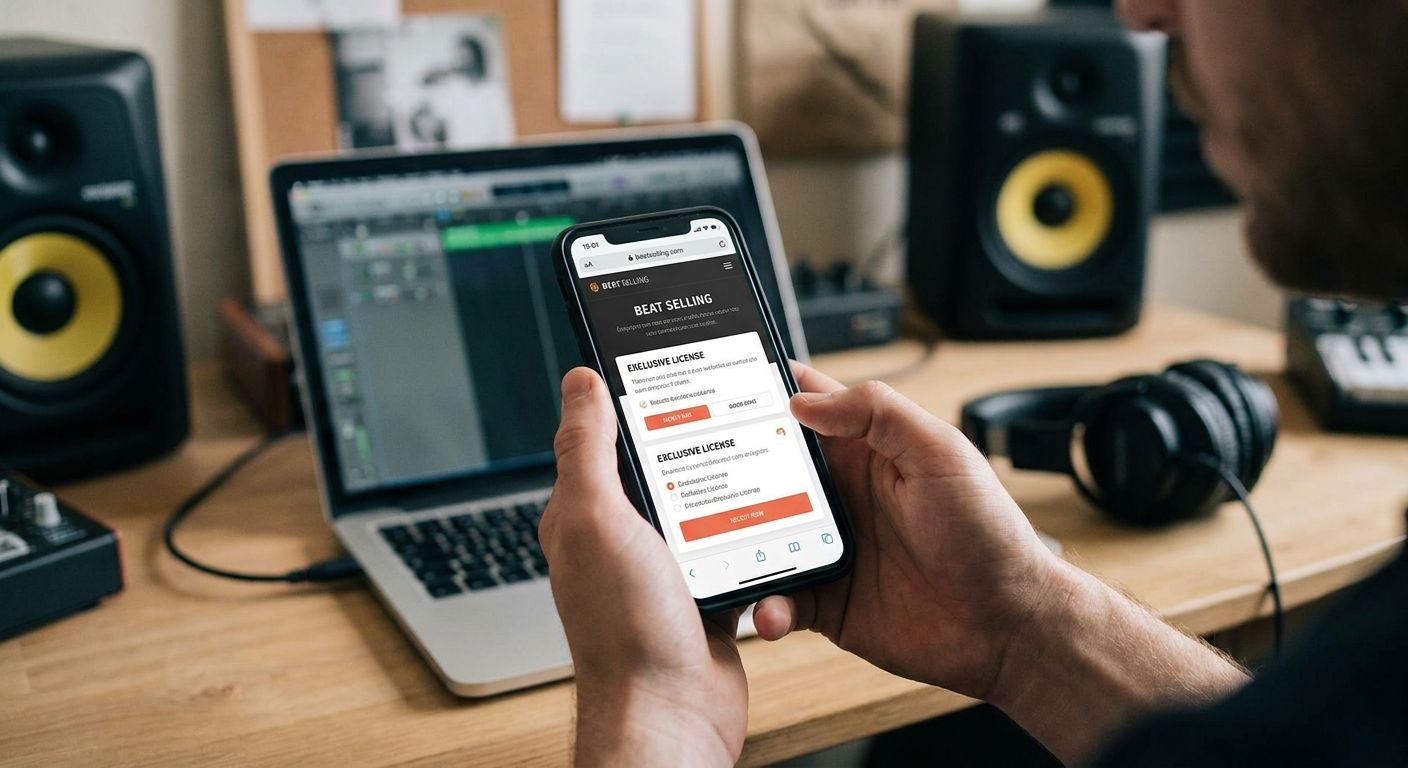
Exclusive licensing generally means one thing across the beat industry: once you buy, the producer takes the beat down and no one else can purchase or use it. That's the entire point of paying for exclusive rights instead of a standard lease.
Before paying, confirm directly with the seller — via the product page or a message — that the beat you're buying is being sold as exclusive and will be removed from sale after your purchase. This matters because non-exclusive and exclusive listings sometimes sit side by side on marketplaces, and clicking the wrong option costs you the ownership you're paying for. The common mistake is assuming a high price tag automatically means exclusive rights — always verify the terms, never assume from price alone.
5. Check the file package before checkout
A proper exclusive beat purchase should include more than an MP3. Look for a full WAV file at 44.1kHz/16-bit — the industry-standard format for mixing and mastering — plus trackout stems (individual instrument and drum layers) so your engineer has room to work.
This step accomplishes control over your final mix. An MP3-only beat limits what a mixing engineer can do later, especially around low-end and stereo width. The common mistake is checking out fast and only realizing after payment that you received a compressed MP3 instead of full-quality files — ask before you buy, not after.
6. Test the beat in your own recording session immediately
Don't let a purchased beat sit unused for weeks. Load it into your session and lay down a rough vocal take within the first day or two, while the reference tracks and mood from step one are still fresh in your head.
This step accomplishes momentum and catches problems early — tempo drift, key clashes with your vocal range, or mix issues you didn't notice on preview. The common mistake independent rappers make is stockpiling exclusive beats without recording to them, which means you've spent money without moving a single project forward.
Browse exclusive beats now
Trap and hip-hop instrumentals ready for independent artists in 2026.
Troubleshooting
The beat still shows as available after you bought exclusive rights. Message the producer directly and ask for confirmation the listing has been pulled — a delay of a day or two is normal for manual updates, but it should not sit live indefinitely.
You received an MP3 instead of the full WAV and stems. Reach back out before you move forward with mixing; most sellers will send the correct files once you flag the mismatch, since it's usually a fulfillment error rather than a bait-and-switch.
The beat sounds different in your session than it did in the preview player. Preview players often compress audio for streaming — always re-check on the actual purchased WAV file before judging the final quality.
You can't tell if a license is exclusive or a standard lease. Read the license document line by line, not the marketing copy on the sales page — the actual terms document is where exclusivity gets defined legally.
Your vocal take doesn't sit well in the mix. This is often a key or tempo mismatch you missed during the preview stage — go back to step three's habit of playing the full loop before you buy, and consider it a lesson for the next purchase.
You bought too many beats and can't keep track of licensing terms for each. Keep a simple spreadsheet: beat name, purchase date, license type, and file formats received, updated the same day you buy.
Tools and resources
- A trap and hip-hop specific catalog, such as the one on louiehasit.com, for genre-consistent shopping
- Studio monitors or quality headphones for accurate previewing
- A DAW session template ready to drop new beats into immediately
- A basic license-tracking spreadsheet (beat name, date, format, exclusivity status)
- Mixing and mastering support once your vocal take is recorded, since exclusive beats still need a final mix pass to sound release-ready
What to do next
Once you've bought and recorded to an exclusive beat, the next bottleneck for most independent rappers is the mix — a great beat and a raw vocal take still need mixing and mastering before release. If that's your next step in 2026, line it up before you sit on finished vocals for weeks waiting to figure it out.
FAQ
What does buying an exclusive beat actually mean?
Buying an exclusive beat means you're the only artist who can use that instrumental, and the producer removes it from sale once you purchase it. It's different from a standard lease, where the same beat can sell to multiple artists.
How much should I budget to buy exclusive beats online in 2026?
Pricing on exclusive beats varies by producer reputation and production quality, so there's no fixed number across the market. Set your budget before browsing and treat it as a hard ceiling, not a starting point.
Is it better to buy exclusive or non-exclusive beats as an independent rapper?
Exclusive beats are better once you're releasing music seriously, since you avoid another artist dropping a track on the same instrumental. Non-exclusive leases work fine for early demos or freestyles where ownership matters less.
What file formats should come with an exclusive beat purchase?
A full exclusive beat package should include a 44.1kHz/16-bit WAV file plus trackout stems for mixing. An MP3-only file limits what your engineer can do during mastering.
Can a producer resell a beat after selling it exclusively?
No — once a beat is sold exclusively, the producer should not resell or relicense it to anyone else. Confirm this directly with the seller before paying, since it's the core value of exclusive rights.
How do I know if a beat license is really exclusive?
Read the actual license document, not the sales page description, since exclusivity terms are defined legally in the agreement itself. If the document doesn't explicitly state exclusive rights and removal from sale, ask the seller directly before buying.
Should I test a beat before buying it exclusively?
Yes — listen to the full loop at least twice on studio monitors or good headphones before purchase, since previews can compress or thin out the low end. Testing on real speakers avoids buying a beat that sounds different once you're mixing vocals over it.
What's the biggest mistake independent rappers make buying exclusive beats?
The biggest mistake is buying based on price or a short preview clip instead of confirming exclusivity terms and file formats first. The second most common mistake is stockpiling beats without recording to them right away.
One last thing
The artists who get the most out of exclusive beats aren't the ones who buy the most — they're the ones who record to a beat within days of buying it, while the reference sound and mood from their original search are still fresh. A beat sitting unused in a folder for months isn't an asset, it's a sunk cost with 2026 still running out the clock on your release calendar.