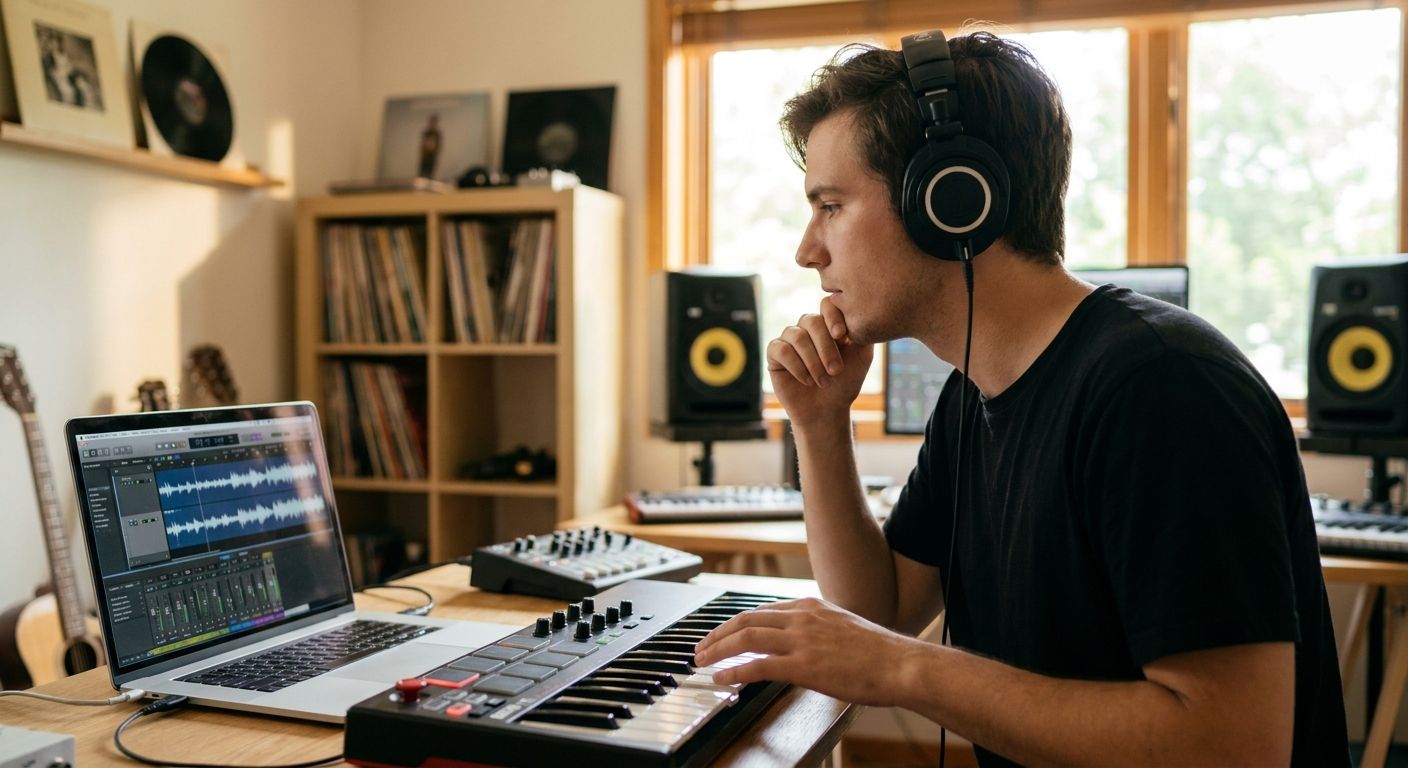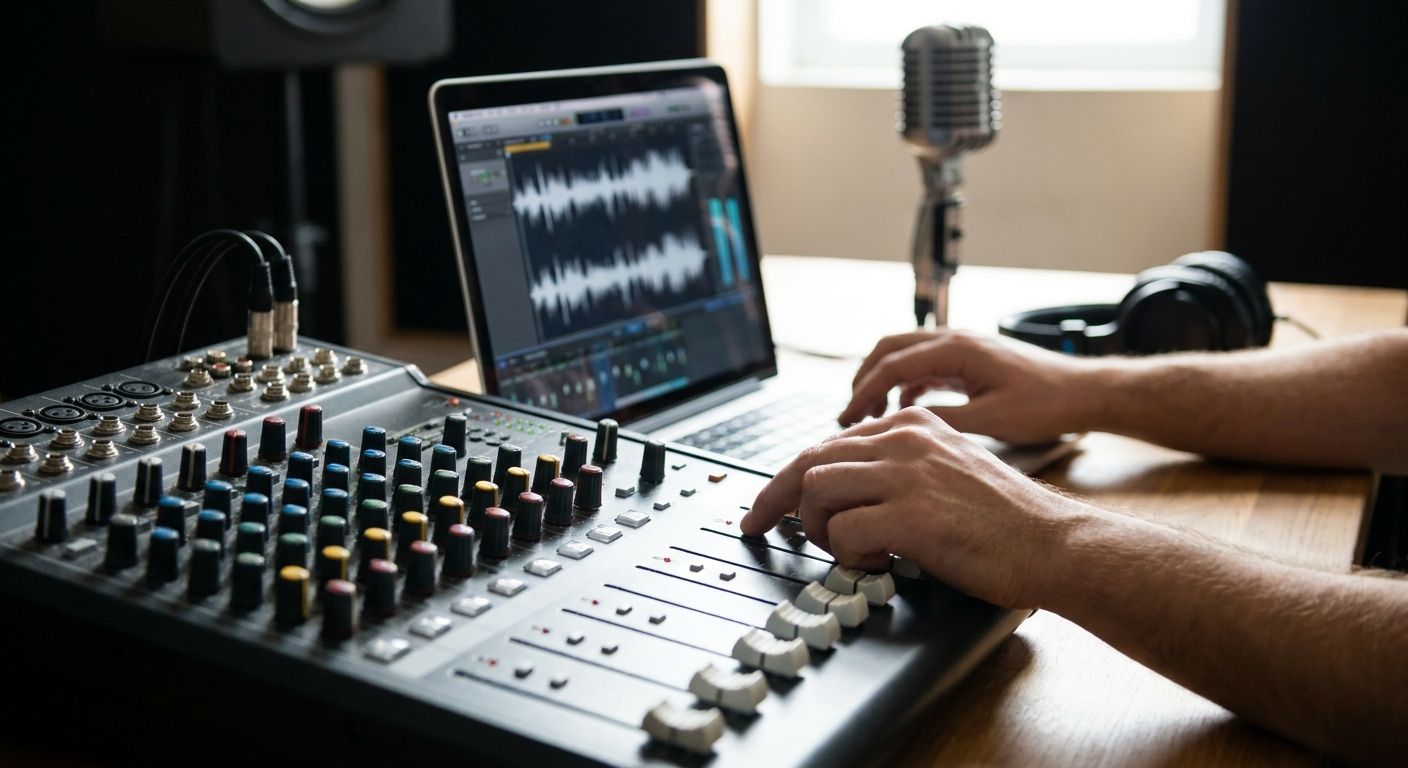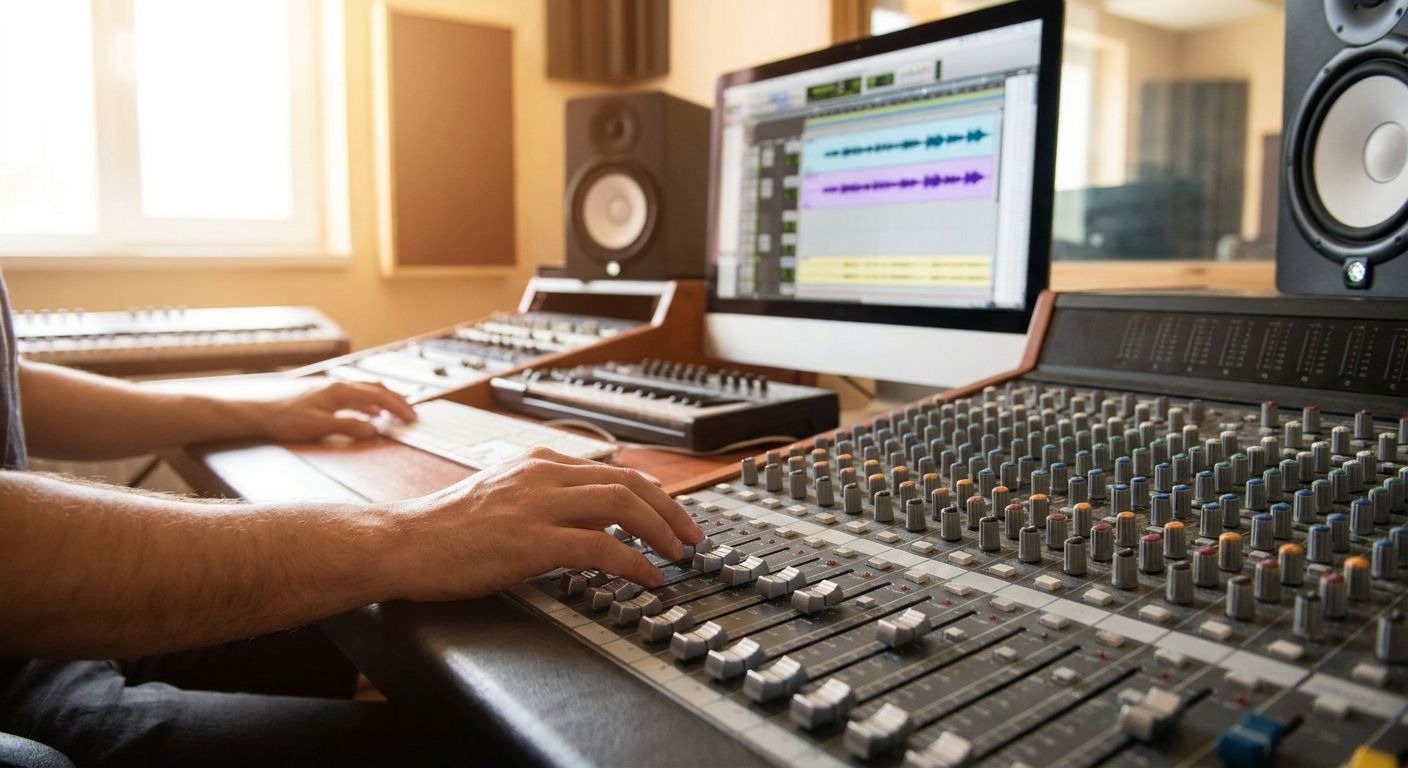
Mixing a hip-hop song step by step means gain-staging every track first, carving space with EQ, controlling dynamics with compression, building the low end around the kick and 808, then finishing with reverb, automation, and a loudness pass to roughly -14 LUFS integrated for streaming. The step most home producers skip — gain staging before touching a single plugin — is exactly what separates a mix that holds up on AirPods and car systems from one that falls apart the second it leaves your studio monitors.
- Gain stage before EQ or compression — this fixes 80% of muddy home-studio mixes before you add a single plugin.
- The kick and 808 fight for the same 40-100 Hz range; carve one out with EQ or sidechain compression, never both loud at once.
- Streaming platforms target roughly -14 LUFS integrated, so leave headroom during mixing instead of slamming a limiter early.
- Vocal clarity in hip-hop lives in the 2-5 kHz presence range — boost there before reaching for reverb to 'fix' a thin vocal.
- Louie The Producer runs mixing and mastering for independent rappers who want a finished record without learning a DAW from scratch.
Why this matters
A hip-hop mix has fewer moving parts than a full band record — usually a beat, a vocal, maybe backing vocals and ad libs — but every one of those parts fights for the same narrow frequency space. Get the 808 and kick wrong and the whole low end turns to mud on a phone speaker. Get the vocal EQ wrong and the bars get buried under the beat instead of sitting on top of it.
If you'd rather see the numbers before committing time to learning this yourself, what it actually costs to mix a hip-hop song breaks down what goes into a professional mix versus a DIY one in 2026. Either way, the steps below are the same ones a working engineer runs through on every session.
How to Mix a Hip-Hop Song Step by Step
Work through these in order — skipping ahead to reverb and effects before your gain staging and EQ is the single most common reason home mixes sound worse than the reference track you're comparing against.
- Gain stage everything first. Set every fader so peaks sit around -18 to -12 dBFS before you touch a plugin. This gives compressors and saturation something consistent to react to.
- Route into buses. Group drums into one bus, vocals and ad libs into another. Bus processing keeps the whole element cohesive instead of processing 12 tracks individually.
- High-pass what doesn't need low end. Hi-hats, vocal doubles, and most FX don't need anything below 100-150 Hz. Cutting it clears room for the kick and 808.
- Carve the kick-and-808 relationship. These two fight over 40-100 Hz. EQ a notch in the 808 where the kick's transient lives, or sidechain the 808 to duck slightly under the kick hit.
- EQ the vocal for clarity, not volume. Cut buildup around 200-400 Hz, boost presence at 2-5 kHz so bars cut through the beat, and tame harsh sibilance at 5-8 kHz with a de-esser if needed.
- Compress for consistency, not squash. A 3:1 to 4:1 ratio on the lead vocal with a moderate attack keeps ad libs and hook vocals from swallowing the verse dynamics.
- Add reverb and delay last, and sparingly. Space should support the vocal, not bury it. Short plate reverb on the lead, longer delay on ad libs and hooks, dry vocal upfront in the verses.
- Automate. Ride the hook vocal up, pull ad libs back so they don't compete with the main line, and ride the 808 down on sustained notes so it doesn't overpower the mix.
- Reference and check mono. A/B against a commercially released track in the same subgenre and fold the mix to mono — if the vocal or 808 disappears, something is out of phase and needs fixing before you move to mastering.
| Step | What it fixes | Skip it and... |
|---|---|---|
| Gain staging | Inconsistent plugin behavior | Compressors react unpredictably track to track |
| Kick/808 EQ carve | Muddy, undefined low end | Bass turns to noise on phone speakers |
| Vocal presence EQ | Vocals buried under the beat | Bars get lost, especially in busy trap beats |
| Loudness pass to ~-14 LUFS | Track sounds quiet or overly squashed on streaming | Platforms auto-turn it down and clip the dynamics |
Why Your Mix Falls Apart
Most home-studio hip-hop mixes go wrong for a handful of repeatable reasons, not bad ears:
- No gain staging — plugins are tuned to react to a certain input level, and skipping this step throws off every processor downstream.
- Kick and 808 both fighting for 40-100 Hz — the most common low-end problem in trap and hip-hop specifically.
- Over-compressing the vocal until it loses the natural push and pull of a rap delivery.
- Mixing at loud volume for hours, which causes ear fatigue and leads to over-EQing highs and over-boosting bass.
- No reference track, so there's nothing to compare tonal balance and loudness against.
- Poor monitoring — mixing entirely on cheap earbuds or an untreated room hides problems that show up everywhere else.
If your low end sounds huge in the studio and disappears on a phone speaker, that's almost always the kick-and-808 relationship, not your headphones.
“If the vocal disappears when you fold the mix to mono, fix the phase before you touch mastering.”
When to bring in a mix engineer instead
DIY mixing works when you're building skills on a budget, but a lot of independent rappers get stuck rebalancing the same four elements for weeks without a trained ear to catch what's wrong. Louie The Producer runs mixing and mastering for hip-hop artists for exactly that stage — you send stems, get back a mix built around the kick/808 relationship and vocal presence range covered above, without the trial-and-error learning curve.
The other variable that quietly wrecks mixes before they even get to the DAW is recording quality. A vocal tracked on a bad mic in an untreated room forces the mix engineer to fight noise and reflections instead of shaping tone — worth checking what a solid home rap studio recording setup actually needs before you record your next session.
Skip the guesswork on your next mix
Send your stems and get a finished hip-hop mix built for streaming and club systems.
How long does it take to mix a hip-hop song?
Mixing time depends on stem count and how many revision rounds the vocal and 808 balance need, not a fixed clock. A single beat-plus-vocal record with a simple hook moves faster than a track with backup vocals, layered ad libs, and multiple hook variations.
Do I need to master after mixing?
Yes — mastering is a separate pass that happens after the mix is finished, focused on final loudness (around -14 LUFS for streaming), stereo width, and translation across playback systems. A mix that isn't mastered often sounds noticeably quieter next to commercially released hip-hop tracks.
Can I mix a hip-hop song using only headphones?
You can start a mix on headphones, but headphones alone hide mono compatibility and room-bass problems that show up on car systems and phone speakers. Cross-check the mix on at least one other playback source before calling it finished.
FAQ
What's the best DAW for mixing hip-hop songs?
There's no single best DAW for mixing hip-hop — FL Studio, Pro Tools, and Ableton Live all handle the same EQ, compression, and bus-routing workflow described above. The engine matters less than following gain staging and the kick/808 carve consistently.
How much does it cost to mix a hip-hop song in 2026?
Cost depends on engineer experience, stem count, and how many revisions you need, so pricing varies by project rather than a flat rate. Check current mixing and mastering rates directly for an accurate quote.
Is mixing different from mastering?
Yes, mixing balances the individual tracks in a song while mastering is a separate final pass that sets overall loudness and translation across playback systems. Both steps happen in sequence, never at the same time.
What LUFS should a hip-hop song be for streaming?
Streaming platforms like Spotify target roughly -14 LUFS integrated, so mixing with headroom below that level keeps the eventual master from sounding squashed. Mixing too loud before mastering leaves no room for the final loudness pass.
Do I need to hire a mix engineer or can I do it myself?
You can mix a hip-hop song yourself using the gain-staging, EQ, and compression steps above, but a trained engineer catches kick/808 and vocal-presence issues faster. Hiring out makes sense once DIY revisions start eating more time than the song is worth.
How do I fix muddy 808s in a hip-hop mix?
Muddy 808s usually come from overlap with the kick drum in the 40-100 Hz range, fixed by EQ carving a notch or sidechaining the 808 to duck under the kick hit. High-passing everything else that doesn't need low end also clears room for the 808 to sit cleanly.
Should I mix in mono or stereo first?
Build the mix in stereo but check it in mono regularly, since phase issues that are invisible in stereo can cancel out the vocal or 808 entirely when played on a single speaker. Folding to mono at the reference-check step catches this before mastering.
One last thing
The detail most home producers never check: fold your mix to mono before you call it done. If the vocal or 808 gets noticeably quieter or disappears, something in your reverb or panning is out of phase — and that's invisible in stereo headphones but obvious the moment the track plays through a single Bluetooth speaker, which is exactly where a lot of hip-hop actually gets heard in 2026.