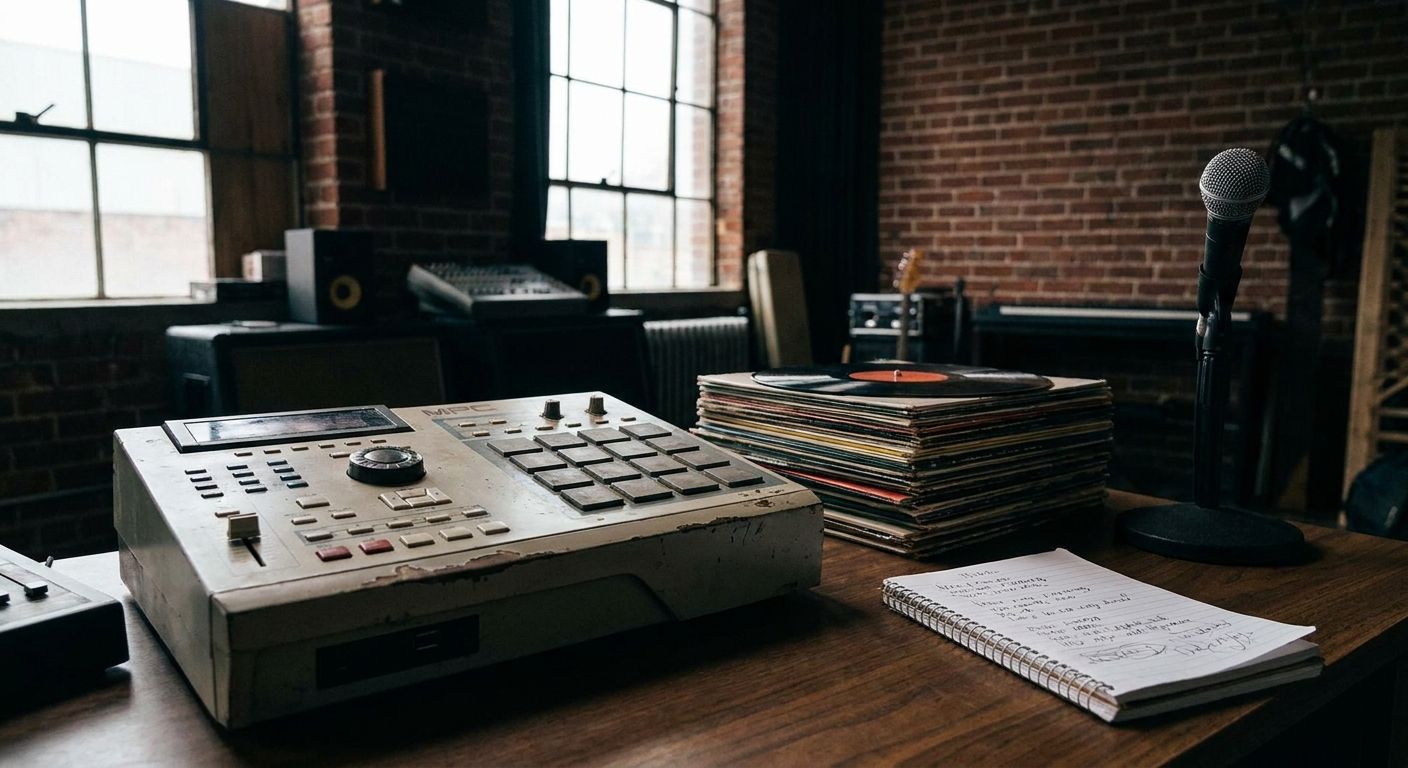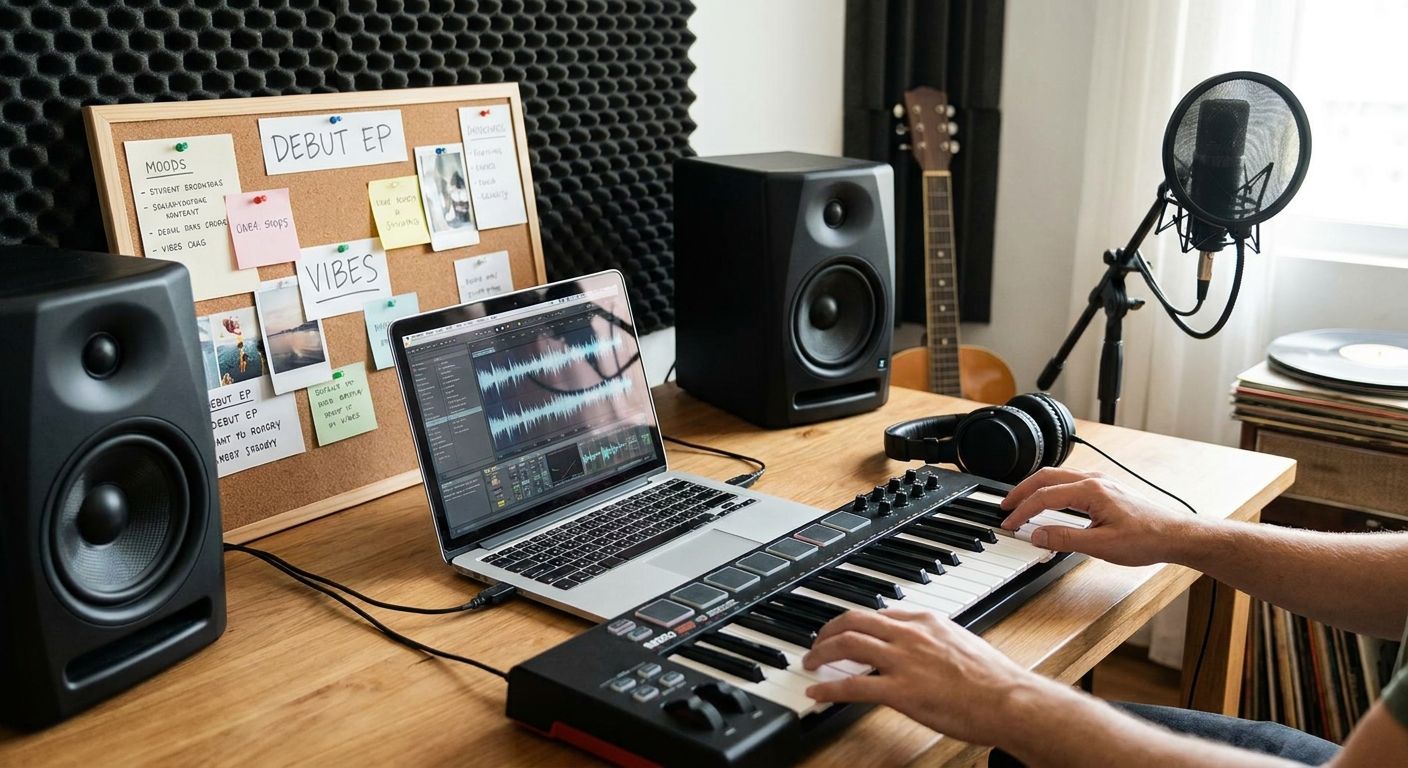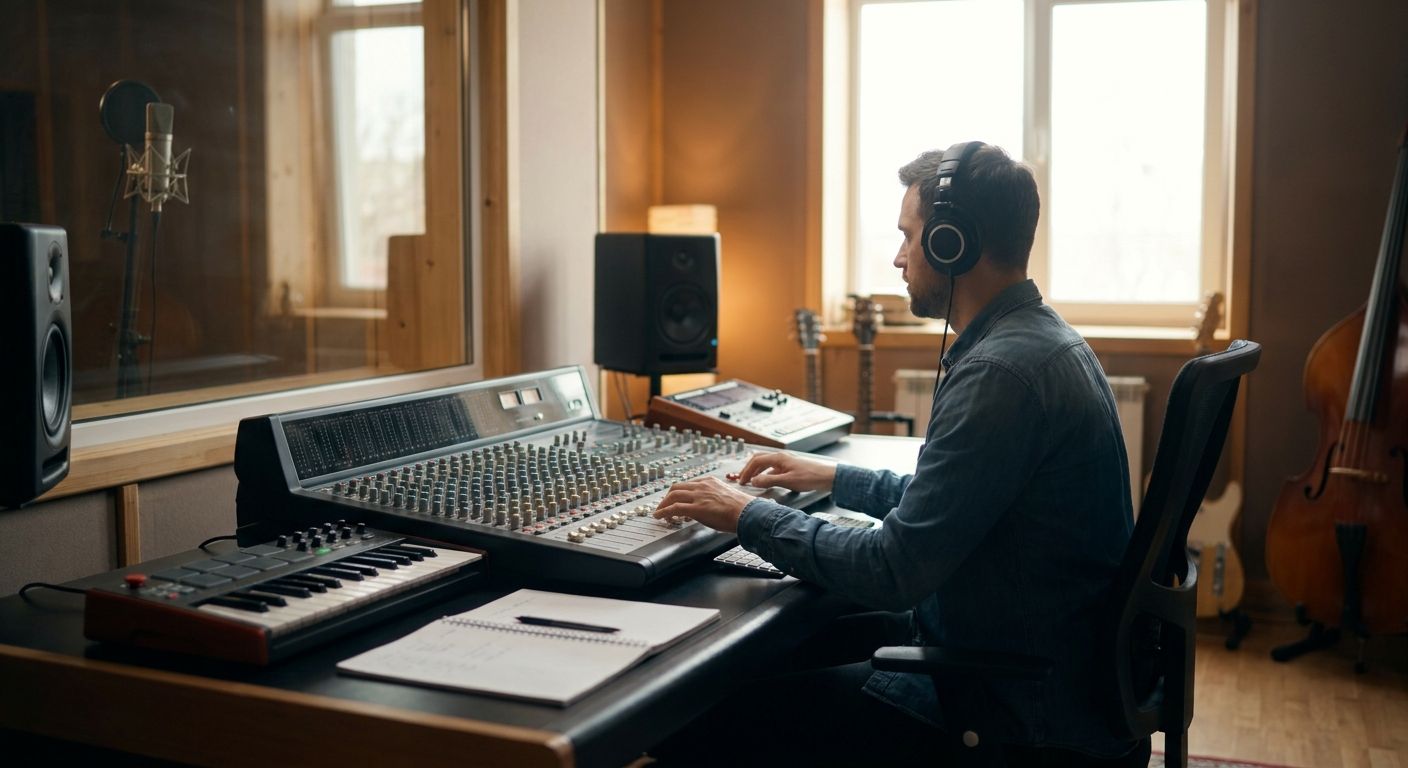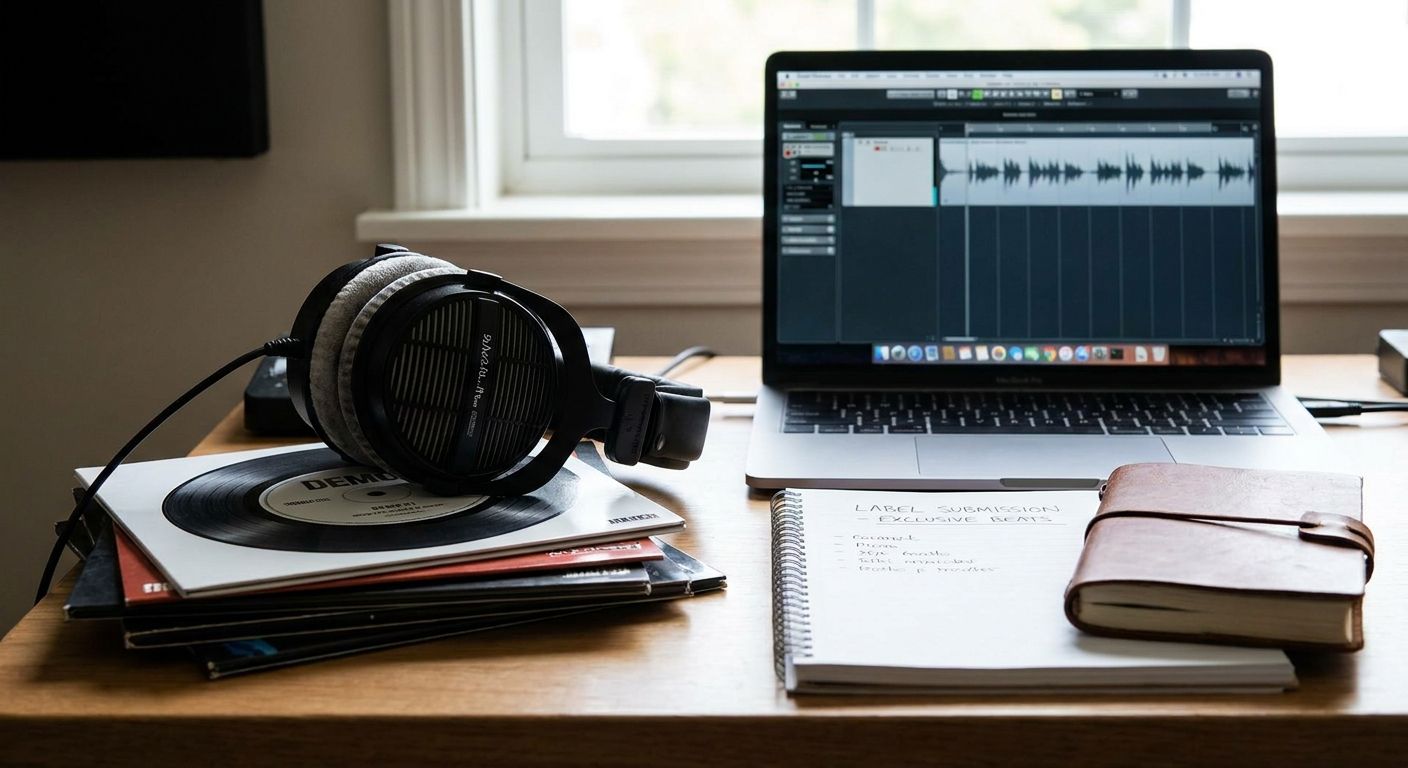
Exclusive beats for label demo submissions are one-of-a-kind instrumentals you buy outright so no other artist's demo can carry the same beat an A&R is hearing behind your vocals. A demo aimed at a label gets checked for copyright status before anyone judges the hook, so the paperwork behind the beat matters as much as the sound of it.
- Exclusive beats for label demo submissions hand you full copyright — leased beats risk clearance disputes mid-deal.
- A&Rs skip demos built on beats they recognize from ten other uploads; exclusivity is what makes yours stand out.
- Master the demo at 44.1kHz/24-bit WAV before submission — rough mixes get muted in the first 15 seconds.
- Louie The Producer sells exclusive trap and hip-hop beats with full buyout agreements for label-ready demos in 2026.
- Build a 3-5 track project around the beat instead of sending one loose single.
Why exclusive beats matter for label demo submissions
Label A&Rs and A&R coordinators get through a stack of submissions every week, and any beat they've already heard on someone else's demo drops your track into the "sounds like everyone else" pile instantly. Exclusive beats for label demo submissions solve that specific problem: once you buy the beat outright, it's off the market, and nobody else's package lands on the same desk with the identical instrumental underneath it.
Labels also check ownership before they spend real time on a project. A leased beat with vague terms, or a free-use tag pulled off a random channel, can create a copyright dispute the moment a deal starts moving. A full buyout agreement — the kind attached to an exclusive purchase from Louie The Producer — gives you a document that proves you can clear the beat for release, sync, or resale without circling back to the original producer for permission.
That combination of distinctiveness and clean paperwork is what separates a demo an A&R forwards to their team from one they mute at the 15-second mark.
1. Confirm exclusivity and copyright terms before you submit
Read the license document, not just the price tag, before a beat goes anywhere near a label demo.
- Check for the word "exclusive" or "full buyout" in the agreement, not just "premium lease."
- Confirm the license transfers master ownership, not just an extended use window.
- Verify the beat is pulled from the seller's catalog once you buy it — ask directly if it isn't stated.
- Save the signed agreement as a PDF; a label's legal team will ask for it during due diligence.
- Flag any co-writer or sample clearance clauses buried in the fine print.
2. Pick a beat that fits your artist identity, not just what's trending
A beat that fits your lane beats a beat that's just popular this month. For independent rappers building a trap-driven identity, trap beats for sale built for exclusive purchase keep your demo consistent with your brand instead of chasing whatever's charting this quarter.
- Match tempo and key to your natural vocal range, not the beat's popularity.
- Pull 3-4 finalists and record a rough verse over each before you decide.
- Ask the producer for the mood tags — dark, melodic, aggressive — used to catalog the beat.
- Avoid picking a beat because it echoes a record already on the label's roster; A&Rs notice the copy.
3. Get professional mixing and mastering before the demo goes out
A rough mix tells an A&R you're not submission-ready, no matter how strong the writing is underneath it.
- Send stems or a rough bounce to a mixing engineer at least a week before your deadline.
- Master to 44.1kHz/24-bit WAV, the standard delivery format most labels and streaming platforms expect.
- A/B your mix against a released record in the same subgenre, on the same playback system.
- On a tight budget, request a mix-only pass first and add mastering once the arrangement is locked.
- If you're building the demo the way you'd release it publicly, mixing and mastering for SoundCloud rappers handles both passes in one workflow.
4. Package your demo the way A&Rs actually expect it
- Lead with your strongest 60 seconds — most A&Rs don't make it past the first minute of a submission.
- Include a one-paragraph artist bio and a link to your existing streaming numbers, not a full resume.
- Send a single high-quality WAV or streaming link, never a zipped folder of a dozen half-finished ideas.
- Label the file with your artist name and track title, not "demo_final_v3."
- Attach the beat's licensing proof only if the submission portal specifically requests it.
5. Build a submission-ready project around the beat, not a loose one-off
- Build a 3-5 track EP or single that shows range across mood and tempo, not just one strong record.
- Sequence the project so the exclusive beat you're leading with sits in the first two tracks.
- Treat the demo like a body of work even if you're only sending one song — labels want proof more exists.
- Note which tracks share production continuity so an A&R hears a coherent artist, not a grab bag of styles.
6. Lock your paperwork with a full buyout agreement
- Get the buyout agreement in writing with both parties' names, the date, and the beat title specified.
- Confirm the agreement states full copyright transfer, not a verbal "no questions asked" promise.
- Store a copy with your manager or lawyer before the demo leaves your inbox.
- If you've never closed a buyout deal, how to buy exclusive beats online walks through the steps in plain terms.
7. Follow up without looking desperate
- Wait 2-3 weeks before a single follow-up email or DM.
- Reference something specific from your submission, not a generic "just checking in."
- Keep a spreadsheet of every label and submission date so you don't duplicate outreach.
- If a label passes, ask whether they'd reconsider once you have a placement or higher streaming numbers.
Comparing your beat options for a label demo
| Option | Best For | Ownership | Key Limitation |
|---|---|---|---|
| Free/no-license beats | Testing arrangement ideas only | None — not clearable for release | Can't legally go into a label demo |
| Standard lease | Casual releases, low-stakes uploads | Producer keeps ownership | Same beat can be leased to other artists |
| Exclusive buyout purchase | Label demo submissions | Full copyright transfer to you | Costs more upfront than a lease |
| Custom production commission | Artists needing a beat built to an exact reference | Full copyright, negotiated in the agreement | Longer turnaround than an off-catalog buy |
Exclusive buyout purchase wins for label demo submissions — it's the only option on this table that hands you clean ownership without ongoing dependency on someone else's license terms. Free beats and standard leases: skip for anything going to an A&R. Custom commissions: hold for later projects once you know exactly what sound you need built from scratch.
Get an exclusive, label-ready beat
Full buyout agreements attached to every exclusive purchase.
Common mistakes artists make with label demo submissions
- Submitting a beat still available for lease elsewhere, so the label's legal team flags it during clearance checks.
- Sending a rough bounce instead of a mastered WAV, which reads as "not ready" no matter how strong the verse is.
- Building the whole submission around one loose single instead of a 3-5 track project that shows range.
- Skipping the license agreement entirely because the seller "said it's fine" — verbal promises don't survive a contract dispute.
- Following up daily instead of waiting the standard 2-3 weeks, which signals inexperience to A&R staff.
FAQ
What's the best beat license for a label demo submission in 2026?
An exclusive buyout wins over a standard lease because it hands you full copyright with no other artist sharing the same instrumental. Labels checking ownership before a deal moves forward want that paperwork clean, not pending.
Is a leased beat ever okay for a label submission?
It's risky because the producer can lease the same beat to other artists, creating a copyright question a label's legal team will flag. An exclusive buyout removes that risk entirely.
How much should you spend on an exclusive beat before submitting to a label?
Pricing varies by producer and catalog, so check current rates directly with the seller rather than assuming a flat industry number. What matters more than the price is confirming the agreement includes full copyright transfer.
How many songs should be in a label demo package?
A 3-5 track EP or single that shows range across mood and tempo works better than one loose record. Labels want to see a body of work exists, not a single idea.
Does mixing and mastering quality actually affect whether a label listens?
Yes — a rough or unmastered bounce reads as not submission-ready within the first 15 seconds. Mastering to 44.1kHz/24-bit WAV is the standard most labels and streaming platforms expect.
Can you submit the same exclusive beat to multiple labels?
Yes, because a full buyout transfers ownership to you, meaning you decide where and how the beat gets used going forward. A leased beat doesn't give you that same freedom.
How long should you wait before following up on a label demo submission?
Wait 2-3 weeks before a single follow-up email or DM referencing something specific from your submission. Following up sooner or more often reads as inexperience to A&R staff.
What's the difference between a beat lease and a full buyout?
A lease lets you use the beat under specific terms while the producer keeps ownership and can license it to others. A full buyout transfers complete copyright to you, which is what a label demo submission needs.
One last thing
An A&R checks whether the master rights are clean before they check whether the hook is catchy — the paperwork question comes first, not last, and a demo that stalls on ownership never gets to the part where the music decides anything. Buy exclusive, get the buyout agreement in writing, and master the file properly before it leaves your inbox.