
Finding quality beats as an independent rapper used to mean knowing the right people in the right city. That’s changed. Today, thousands of online beat stores give you instant access to professional instrumentals from producers all over the world. But not every beat you find online is created equal, and not every deal is as clean as it looks. Some artists get burned by unclear licensing, shady sellers, or beats they can’t legally use for commercial releases. This guide breaks down everything you need to know to shop smart, protect your music, and find the right sound for your next project.
Table of Contents
Key Takeaways
| Point | Details |
|---|---|
| Compare before buying | Evaluate store features, rights, and pricing options to get the best value. |
| Understand your license | Carefully read what rights your purchase grants to avoid legal issues later. |
| Prioritize reputable sources | Choose established beat stores with clear agreements and support to ensure quality and safety. |
| Safe transactions matter | Get documentation for your beat purchase to protect your work and maximize your release potential. |
The modern beat landscape: Why online stores matter
The music industry has shifted dramatically over the last decade. Independent artists no longer need to camp outside a studio hoping to catch a producer’s attention. Buying beats online has become the standard move for rappers who want quality production without the gatekeepers.
Online beat marketplaces have exploded in popularity. Platforms now host thousands of producers offering everything from trap bangers to boom bap classics. The global reach is real. A rapper in Atlanta can buy a beat from a producer in London, clear the license in minutes, and have a finished track uploaded to Spotify by the end of the week. That kind of speed and access simply did not exist before.
Here’s what makes online beat stores stand out compared to traditional methods:
-
Affordability: Lease prices typically range from $20 to $200, far below what studio producers once charged for exclusive access
-
Variety: Thousands of beats across every genre and sub-genre, all in one place
-
Transparency: Written licensing agreements replace verbal handshakes
-
Speed: Instant downloads mean you can start recording the same day
-
Comparison shopping: You can browse dozens of producers and compare quality, price, and terms before committing
That said,
is a real topic in the artist community. Some artists and communities advise caution about buying beats online, especially regarding licensing and ownership. The concern is valid. But the solution is education, not avoidance.| Feature | Traditional networking | Online beat stores |
|---|---|---|
| Access | Local, limited | Global, unlimited |
| Pricing | Negotiated, often high | Transparent, competitive |
| Licensing | Verbal or informal | Written agreements |
| Speed | Days to weeks | Instant download |
| Variety | Limited to local producers | Thousands of options |
The table above tells the story clearly. Online beat stores win on almost every practical level. The key is knowing how to use them correctly.
Benefits of using online beat stores for independent rappers
The advantages go beyond just convenience. Online beat stores give independent artists real creative and business leverage. Here is a breakdown of the biggest wins.
-
Instant catalog access. You can browse hundreds of beats in an hour. Filter by BPM, key, genre, or mood. Find the exact vibe you need for your project without waiting on anyone.
-
Flexible licensing options. Most stores offer lease agreements, exclusive purchases, and everything in between. You choose based on your budget and how big you plan to push the release.
-
Side-by-side price comparison. Unlike working with a single producer in a studio, online stores let you compare pricing across multiple sellers at once. You get better value for your money.
-
Relationship building with producers. Many artists who start with a lease end up building ongoing working relationships with producers they discover online. That consistency in sound becomes part of your brand identity.
-
Documentation from day one. Every purchase comes with a receipt and a license file. That paper trail matters when you’re pitching to blogs, getting on playlists, or dealing with streaming platforms.
Pro Tip: When you find a producer whose style fits your sound, buy more than one beat from them. Consistency across a project creates a stronger artistic identity and makes your album or EP feel intentional.
It is important to understand that leased beats carry varied rights, and artists must review agreements carefully before recording. A standard lease usually allows a set number of streams, sales, and performances. Go over that limit and you may need to upgrade your license or face issues down the road.
| License type | Typical cost | Usage limits | Exclusivity |
|---|---|---|---|
| Basic lease | $20 to $50 | 2,500 to 10,000 streams | Non-exclusive |
| Premium lease | $50 to $150 | 100,000 to 500,000 streams | Non-exclusive |
| Unlimited lease | $100 to $200 | Unlimited streams | Non-exclusive |
| Exclusive rights | $300 to $2,000+ | Unlimited | Exclusive to buyer |
Knowing which tier fits your release strategy is one of the most important decisions you will make as an independent artist.
Licensing essentials: What every artist needs to know
Licensing is where most artists make costly mistakes. Understanding what you are actually buying protects your music and your income long-term.
The most important distinction is between exclusive and non-exclusive (leased) beats. An exclusive beat means you are the only artist who can use it going forward. A leased beat means the producer can sell the same instrumental to multiple artists. Both are legitimate options. The right choice depends on your goals.
Here are the key terms every artist should review before completing a purchase:
-
Usage limits: How many streams, downloads, or sales are covered under the license
-
Credit requirements: Whether you must credit the producer in your song or on streaming platforms
-
Distribution caps: Some leases limit how many platforms you can distribute to
-
Expiration dates: Some leases expire after a set period, even if you haven’t hit the stream limit
-
Sync rights: Whether you can use the beat in videos, films, or commercials
“Understand what rights you are actually buying, often a lease, and review licensing agreements carefully before you record or release anything.” This is the single most important habit you can build as an independent artist.
One major risk that does not get enough attention is using beats sourced from YouTube without a formal agreement. Many producers post free beats on YouTube for promotional purposes, but free YouTube beats without clear agreements can cause serious problems if you release commercially. The producer still owns the copyright. Without documentation, you have no legal protection.
Pro Tip: Always save your license file in a dedicated folder organized by project. When a distributor or label asks for proof of rights, you want to pull that document in seconds, not spend hours searching your email.
Documentation is not just about legal protection. It is also about professionalism. Artists who can quickly produce their licensing paperwork are taken more seriously by blogs, playlist curators, and sync licensing opportunities.
Common concerns and how to avoid online pitfalls
It is fair to have doubts about buying beats online. The market is crowded, and not every seller operates with the same level of professionalism. Here is how to protect yourself.
“Some artists and communities advise caution about buying beats online, especially the cheapest and least-documented sources.” That caution is worth taking seriously, but it should push you toward smarter shopping, not away from online stores altogether.
Here is a step-by-step checklist for a safe and professional online beat purchase:
-
Research the producer. Look for reviews, social media presence, and a catalog history. A producer with 150+ satisfied clients and years of releases is far more trustworthy than an anonymous seller.
-
Read the full license agreement. Do not skim it. Every clause matters, especially usage limits and credit requirements.
-
Confirm the file format. Make sure you receive the correct stems or WAV files needed for mixing and mastering.
-
Check the refund and dispute policy. Reputable stores have clear policies. Vague or absent policies are a red flag.
-
Verify ownership. Make sure the producer actually owns the beat and has not sampled copyrighted material without clearance.
The pitfall of using beats sourced from modern entertainment beat sources that lack documentation is real. If you release a song on Spotify or Apple Music and the rights are not clearly documented, your track can be taken down and your distributor account flagged. That kind of setback can cost you momentum right when you are building it.
Pro Tip: Before buying, send the producer a quick message. How fast they respond and how clearly they communicate tells you a lot about how they will handle any issues after the sale.
Cheap beats are not always bad beats. But cheap beats with no documentation, no license file, and no responsive seller are almost always trouble. Spend a little more with a producer who has a track record and you will save yourself a lot of headaches.
Real-world impact: From beat selection to finished track
Let’s walk through what the process actually looks like when you do it right. Understanding the full workflow helps you see where online beat stores fit into your creative process.
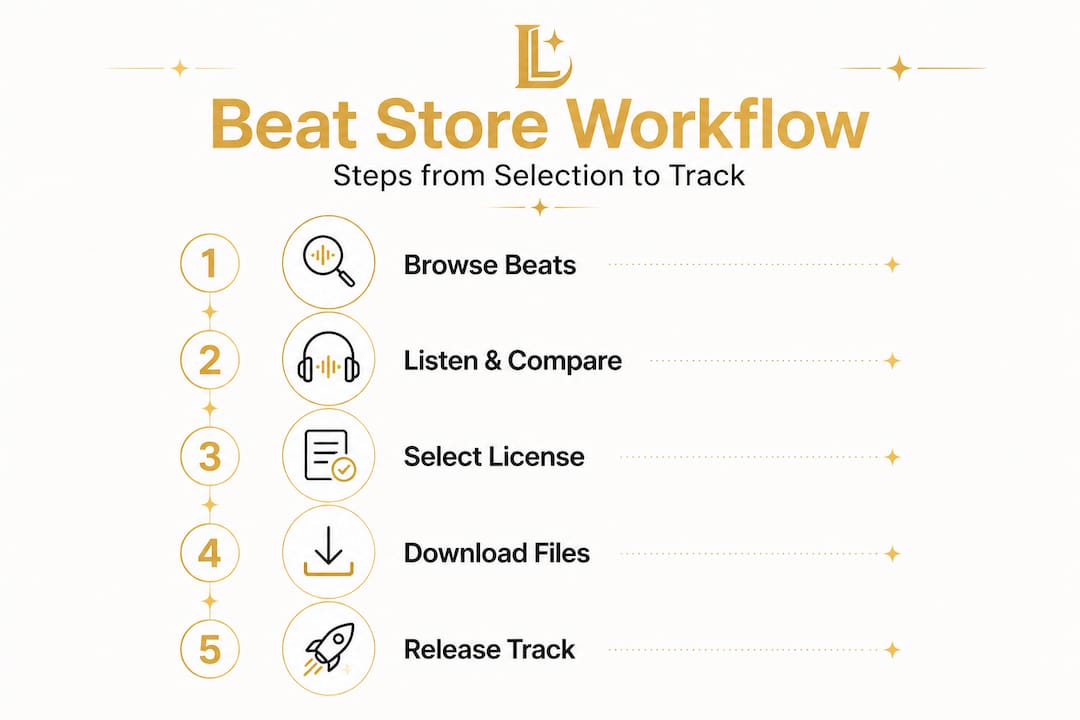
Scenario: You are working on a six-track EP. You browse an online store, filter for dark trap beats between 140 and 150 BPM, and find three instrumentals that match your vision. You purchase premium leases for all three, download the WAV files and license documents, and start writing the same afternoon.
Here is what good documentation does for you at each stage:
-
Recording: You know exactly what credits to include in your metadata
-
Distribution: Your distributor can verify rights before your release goes live
-
Promotion: Blogs and playlist curators can confirm your release is legitimate
-
Monetization: Your streaming royalties flow without disputes or takedowns
-
Future opportunities: Sync licensing and brand deals require clean documentation from day one
Careful beat selection and clear agreements result in fewer legal issues and a smoother release process. Artists who build this habit early in their careers avoid the painful disputes that slow down so many independent rappers at critical moments.
Pro Tip: After you purchase a beat, create a simple one-page document for each track that lists the beat title, producer name, license type, purchase date, and any credit requirements. Keep it with your license file. This habit takes five minutes and can save you hours of stress later.
The artists who treat their music like a business from the start are the ones who build sustainable careers. Online beat stores make that possible at every budget level.
What most guides miss about online beat stores
Most articles about online beat stores focus almost entirely on the risks. Watch out for this, avoid that, be careful here. That framing is not wrong, but it misses the bigger picture.
The real story is about leverage. Independent artists who know how to use online beat stores strategically have an advantage that did not exist ten years ago. You can build a consistent sound, release music on your own timeline, and own your catalog without ever needing a label’s approval. That is not a small thing. That is the entire game.
The artists who struggle with online beat stores are usually the ones who treat it like a vending machine. They grab the cheapest option, skip the license, and wonder why they run into problems. The artists who win are the ones who treat each purchase like a business decision. They research producers, build relationships, and invest in exclusive lease beats when the release warrants it.
Here is the uncomfortable truth: most licensing mistakes are not caused by bad producers or shady stores. They are caused by artists who do not read what they are agreeing to. The information is right there in the license document. The habit of reading it is what separates professional artists from hobbyists.
The opportunity in online beat stores is enormous. The barrier to entry has never been lower. But the artists who truly capitalize on that opportunity are the ones who combine great taste in beats with solid business habits. That combination is what builds a real career.
Upgrade your sound with professional online beats
Ready to put this knowledge to work in your next project? You now have the tools to shop smart, protect your music, and find beats that match your vision.
At LouieHasIt.com, you will find a curated catalog of professional beats built for independent rappers who are serious about their sound. Every beat comes with clear licensing, documented agreements, and the kind of quality you can hear from the first listen. With over 150 satisfied clients and more than ten years of production experience, Louie The Producer is the trusted partner serious artists come back to project after project. Browse the catalog, shop exclusive lease beats, and take the next step toward a release you are proud of.
Frequently asked questions
Are beats bought online exclusive to me?
It depends on the license you purchase. Most affordable beats are leased to multiple artists, while exclusive beats grant you sole rights to the instrumental going forward.
Can I use a beat from YouTube in my commercial release?
Using a beat from YouTube without a formal written agreement can lead to serious copyright and licensing issues that result in takedowns or lost revenue on your release.
What should I check before buying a beat from an online store?
Always review the licensing agreement carefully, confirm usage limits, check the seller’s track record, and make sure you receive proper documentation with your purchase.
Do all online beat stores offer customer support?
Most reputable online beat stores offer some form of customer support, but the quality and response time can vary significantly, so check reviews and test their responsiveness before making a purchase.